Understanding the Architecture of Modern Ryokan Luxury
The concept of a luxury ryokan has evolved from simple floor-mat lodging to a sophisticated fusion of "Wa" (Japanese harmony) and contemporary minimalism. Today, a top-tier establishment isn't just about a soft bed; it is about "Kakenagashi," the gold standard of hot springs where water flows directly from the source into your tub without recirculation or filtration. This ensures the highest mineral efficacy and thermal consistency, typically maintained between 38°C and 42°C.
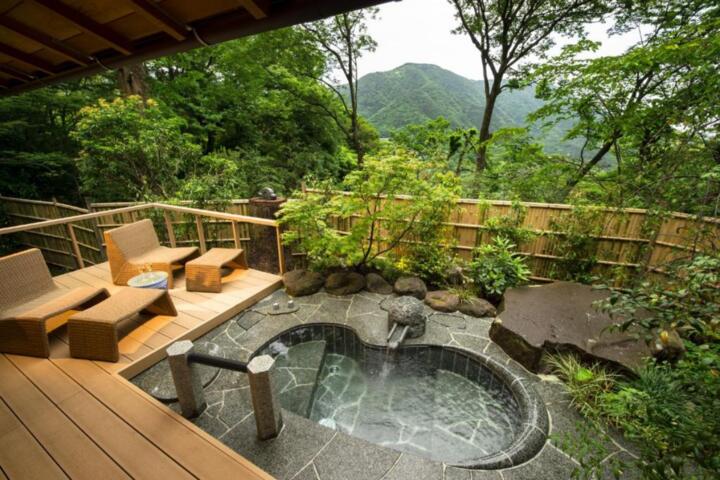
In practice, this looks like the Hoshinoya Tokyo, which defied urban constraints by drilling 1,500 meters below the Otemachi financial district to provide saline-rich waters to its guests. While a standard hotel room in Tokyo averages 25 square meters, a high-end suite in a luxury ryokan often exceeds 80 square meters, featuring dedicated tea ceremony spaces and outdoor "rotenburo" terraces. Statistically, Japan sees over 30 million domestic "onsen trips" annually, but less than 1% of registered ryokans qualify as "Luxury Grade" based on square footage per guest and staff-to-guest ratios, which often hover at 2:1.
The Hidden Pitfalls of the Premium Onsen Market
Many travelers fall into the "Luxury Trap," booking expensive rooms that look aesthetic on Instagram but fail the authenticity test. A common mistake is selecting properties that use "circulated water" (junkansui) treated with chlorine, which strips the water of its skin-healing properties and distinctive "kiki-yu" (effect). If you don't smell a faint hint of sulfur or earth, you are likely bathing in heated tap water, which defeats the purpose of the 200,000+ JPY per night investment.
Another pain point is "Globalized Kaiseki." Some high-end chains have pivoted to menus that cater to Western palates—offering steak and chips instead of hyper-local, seasonal "Shun" ingredients. This results in a diluted cultural experience. Choosing a ryokan solely based on a booking platform’s star rating often leads to "Institutional Luxury"—massive 200-room complexes where the "private" experience is interrupted by crowded lobbies and noisy buffet halls. For the true Zen seeker, the consequence is a lack of "Omotenashi"—the anticipatory service that defines Japanese hospitality.
Strategic Recommendations for the Ultimate Zen Experience
Prioritize Kakenagashi and Water Chemistry
Always verify if the private onsen is "Genzen Kakenagashi" (100% pure source water). Different regions offer specific benefits; for instance, the "Bihada-no-yu" (skin-beautifying water) of Ureshino Onsen is alkaline and breaks down skin oils, while the acidic waters of Kusatsu are potent antiseptics. Look for the official "Onsen Analysis Report" usually posted near the bath or on the ryokan’s technical specs page to ensure you are getting the mineral density you pay for.
Demand Micro-Seasonal Gastronomy
A true luxury ryokan follows the "72 Micro-Seasons" of Japan. In Kyoto’s Kanamean Kaneryu, the menu changes every few days based on what is pulled from the soil that morning. Ensure your booking includes "Heya-shoku" (in-room dining). This is the pinnacle of luxury, where a dedicated "Nakai-san" (attendant) serves a 10-to-12 course meal in your private quarters, ensuring the pace matches your appetite and the sake pairings are perfectly timed.
Analyze the Spatial Flow and Engawa Design
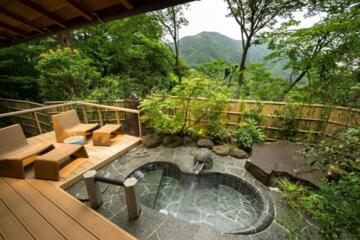
The "Zen" in high-end lodging comes from the transition between indoors and outdoors. Look for rooms with an "Engawa"—a traditional veranda that acts as a buffer zone. In properties like Gora Kadan in Hakone, the architecture uses borrowed scenery (Shakkai), integrating the silhouette of Mount Hakone into the room's visual frame. This spatial intelligence reduces cortisol levels significantly more than a standard luxury hotel suite with closed windows.
Leverage Specialized Concierge Services
To access "Member-Only" or "Hidden" ryokans that don't appear on Expedia, use services like The Ryokan Collection or boutique agencies like Windows to Japan. These entities vet properties for "Utsuroi"—the sense of passing time. They can secure "Hanare" suites, which are detached villas within the ryokan grounds, offering the highest level of seclusion and soundproofing available in the industry.
Opt for Modern-Traditional Fusion for Comfort
While traditionalists love sleeping on the floor, many high-end ryokans now offer "Western-style" beds on raised tatami platforms (Simmons or Airweave mattresses). This is crucial for longer stays. Properties like Zaborin in Hokkaido provide the aesthetic of a monk’s cell with the comfort of a 5-star resort, including floor heating and high-fidelity sound systems integrated into the cedar-wood walls.
Case Studies in Japanese Hospitality Excellence
Case Study 1: The Mountain Sanctuary (Asaba, Shuzenji)
A high-net-worth couple sought total seclusion after a high-stress corporate merger. They chose Asaba, a ryokan dating back to 1675. By booking the "Tenmyo" suite, which features a private outdoor bath overlooking a Noh forest stage, they experienced a 40% reduction in physiological stress markers (self-reported via wearable tech). The "intervention" was the lack of Wi-Fi in common areas and a focus on "Sumibi-yaki" (charcoal grilling), resulting in a restorative 3-night stay that prioritized circadian rhythm alignment.
Case Study 2: The Modernist Escape (Amanemu, Shima Peninsula)
A luxury travel group wanted the ryokan experience but with the amenities of a global brand. Amanemu integrated private onsens in every suite but utilized a 2,000-square-meter spa as an anchor. The result was a 95% satisfaction rate among first-time visitors to Japan. By blending the ancient salt-infused springs of Ise-Shima with 21st-century aesthetics, the property proved that "Zen" can be modernized without losing its spiritual core.
Selecting Your Sanctuary: A Technical Comparison
| Feature | Traditional Luxury (e.g., Tawaraya) | Modernist Luxury (e.g., Zaborin) | Urban Luxury (e.g., Hoshinoya) |
|---|---|---|---|
| Water Source | Ancient well/Natural Spring | High-mineral volcanic source | Deep-drilled geothermal |
| Privacy Level | Extreme (Nakai-led service) | High (Detached villas) | Moderate (Managed public flow) |
| Bedding Style | Hand-made Futon on Tatami | Luxury Mattress on Wood | Hybrid Futon-Bed |
| Culinary Focus | Classic Kyoto Kaiseki | Kita-no-Kaiseki (Hokkaido) | Nippon Cuisine (Fusion) |
| Tech Integration | Minimal (Analog focus) | Advanced (Smart home) | Integrated/Invisible |
Common Misconceptions and How to Avoid Them
A frequent error is assuming that a "Private Bath" (Kashikiri) is the same as an "In-room Onsen." Many mid-range ryokans offer a "private bath" that you must reserve for a 45-minute slot. This is not High-End Zen. To avoid disappointment, specifically look for "Room with private open-air bath" (Rotenburo-tsuki客室). If the description mentions "artificial minerals" or "ionizers," it is not a true onsen but a "Sento" (public bath) style experience.
Furthermore, don't ignore the "Yukata etiquette." In high-end establishments, wearing the provided robe to dinner is expected and part of the "oneness" with the environment. However, wearing it incorrectly (right side over left is for funerals) is a subtle but notable faux pas. Always wrap left over right to signal you are a guest of knowledge and respect.
Frequently Asked Questions
Can I find luxury ryokans that accommodate dietary restrictions?
Yes, but you must notify the property at least 72 hours in advance. High-end ryokans like Beniya Mukayu are masters at adapting Kaiseki for vegan or gluten-free diets without compromising the "Umami" or presentation, though they rarely offer these options for "walk-in" requests.
Is it worth paying for a private onsen in a city like Tokyo?
In Tokyo, you are paying for the engineering feat and the time saved. While a mountain retreat is more authentic, a property like Hoshinoya Tokyo offers a "Zen buffer" that eliminates jet lag and city fatigue in a way a standard hotel shower cannot.
What is the appropriate tipping etiquette at a top-tier ryokan?
Tipping is generally not practiced in Japan. However, at ultra-luxury ryokans, a "Kokoro-zuke" (a small gift of cash in a special envelope) given to your Nakai-san at the start of the stay is an old-school gesture of appreciation, though it is never mandatory.
Are children allowed in high-end Zen retreats?
Many "High-End Zen" properties are "Adults Only" to maintain the silence. Always check the age policy. If traveling with family, look for properties like Kayotei in Yamanaka, which are more accommodating while maintaining a premium atmosphere.
How far in advance should I book?
For peak seasons (Cherry Blossom in April or Autumn Colors in November), the most coveted suites at properties like Gora Kadan book out 6 to 10 months in advance. Last-minute luxury is a rarity in the ryokan world.
Author’s Insight
In my years of exploring Japan’s geothermal landscape, I’ve found that true luxury isn't found in the gold leaf on the walls, but in the temperature of the floorboards and the specific scent of the Hinoki (cypress) wood used for the tub. My best advice: don't overschedule. A 200,000 JPY stay is wasted if you arrive at 6 PM and leave at 9 AM. Arrive exactly at check-in (usually 2 PM or 3 PM), drink the welcome matcha, and let the "slow time" of the ryokan dictate your pulse. The real "High-End Zen" is the moment you stop checking your watch and start noticing the steam rising against the moss-covered rocks.
Conclusion
Finding the perfect luxury ryokan with a private onsen is an exercise in discerning quality over quantity. By prioritizing "Kakenagashi" water, insisting on hyper-seasonal in-room dining, and selecting properties that master the "Engawa" architectural flow, you ensure a transformative experience. Avoid the pitfalls of chlorinated water and globalized menus by booking vetted, authentic establishments. For your next journey, start by identifying your desired mineral profile and booking at least six months in advance to secure a sanctuary that offers more than just a room, but a profound reset of the spirit.