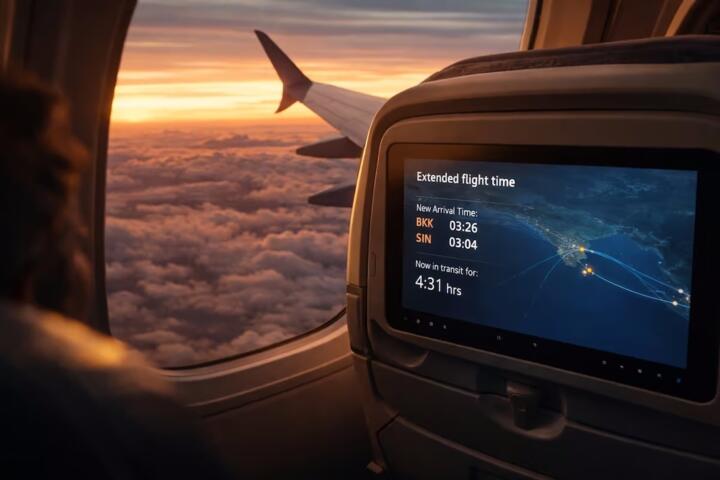
Domestic Flights In Large Nations
Domestic flights reduce travel time between major hubs in large Asian countries where distances are long and ground routes can be slow. A two-hour flight can replace a full-day bus ride, and that difference changes how many activities you can fit into a short itinerary.
In practice, the decision depends on more than air time. You also need to account for getting to the airport, security lines, typical boarding delays, and the time spent at the destination airport before you reach your hotel. For example, a traveler leaving from a city center may spend 45–90 minutes on airport transfer, while a traveler using a suburban station for rail might spend less time on the approach but more time on the journey itself.
Domestic flights also help when schedules matter. If you must arrive by a specific time for a meeting, a flight timetable with multiple daily departures can reduce the risk of missing the day’s plan. That reliability varies by route and season, and it can be affected by weather, air traffic control restrictions, and airport congestion.
Health-related travel planning connects to this choice too. Shorter travel time can reduce fatigue and dehydration risk for some travelers, while frequent transfers and long waits can increase stress. If you have a medical condition that worsens with sitting for long periods, the ability to move around during a flight and then quickly reach local care can matter, though you still need to follow your clinician’s advice.
What People Get Wrong
Many travelers compare only the flight duration and ignore the “door-to-door” time. A flight that looks fast on a map can become slower once you add airport transfer, check-in, and the walk from the gate to baggage claim.
Another common mistake is assuming that the cheapest fare matches the total cost. Low-cost carriers often separate ticket price from seat selection, checked baggage, and sometimes even carry-on rules. If you travel with a medical bag or need extra supplies, the baggage policy can change your options more than the base fare.
People also underestimate how route frequency affects outcomes. A route with one daily departure can be risky when delays happen, while a route with many departures gives you more rebooking choices. Rebooking rules depend on the airline and fare type, and they can differ for basic economy versus flexible tickets.
Supporting technologies shape these experiences. Airport security screening uses standardized procedures, but staffing levels and queue management vary by terminal and time of day. Air traffic management affects departure punctuality, and weather systems can trigger ground stops that ripple across multiple flights. Even when the aircraft is ready, the departure slot may not be.
Finally, travelers sometimes plan around the wrong time zone. Large Asian nations span multiple time zones, and domestic flights can cross them. That changes arrival times on your itinerary and can affect medication schedules if you track doses by local clock versus elapsed time.
How To Choose Wisely
Compare Door-To-Door Time
Start with a simple estimate: total time from leaving your accommodation to arriving at your destination accommodation. Include airport transfer, check-in, security, boarding, flight time, baggage claim, and the final transfer. For a practical baseline, many travelers find that domestic flights often add 2–3 hours of “non-flight” time, though this varies by airport layout and time of day.
If you want a quick method, pick two sample departures on the same day and compare them against the rail or bus schedule. Use the same day-of-week because weekday commuter peaks can change ground travel times. I once checked a route on 2026-02-14 and saw the airport transfer time swing by nearly an hour depending on the departure window, which changed the winner.
Check Baggage And Seat Rules
Read the fare conditions before booking. Look for checked baggage limits, carry-on dimensions, and whether you can bring medical items without extra fees. Some airlines treat medical equipment differently, but the rules still vary, and you may need documentation or advance notice.
Seat selection matters for comfort and movement. If you have mobility needs, choose an aisle seat early and confirm whether the airline charges for it on your fare. If you use a wheelchair or need assistance, request it during booking; the service process depends on the airport’s handling arrangements.
For planning, keep a screenshot of the baggage policy and your booking reference. When delays happen, staff may ask you to confirm what your fare includes, and having the details ready reduces friction.
Plan For Delays With Buffers
Build a buffer around your arrival time. A common approach is to schedule a connection or appointment with at least 3–4 hours of slack after landing for domestic travel, then adjust based on your airport’s typical congestion. If you have a tight schedule, choose flights that arrive earlier in the day so you have more rebooking options if weather disrupts later departures.
Use real-time status tools rather than relying only on the original schedule. Many airlines publish flight status pages, and third-party aggregators can show live updates, but they can lag. On my own planning workflow, I check the airline’s status page first and then compare it with a secondary source; version numbers on airline apps (for example, “v5.3.1” shown in app settings) sometimes correlate with when they started showing gate changes.
Match The Flight To Your Health Needs
Travel time affects fatigue, but flight comfort affects symptoms too. If you manage conditions related to dehydration, consider hydration before and after the flight and avoid over-relying on caffeine. If you have a condition that worsens with prolonged immobility, plan to stand and move during boarding and when the seatbelt sign is off.
For medication timing, decide whether you track doses by departure time or local arrival time. Many travelers use a “departure-time schedule” for consistency, then adjust once they reach the destination. If you cross time zones, confirm the plan with your clinician when your regimen is sensitive to timing.
Also consider airport environment factors. Some airports have long indoor walks, and air conditioning can feel dry. Bringing a small water bottle after security and using lip balm can reduce discomfort, which matters if you’re sensitive to dry air.
Educational Case Examples
Example 1: Business Trip Between Hubs
A consultant plans a meeting in a second-tier city in a large country. The rail option takes 7–9 hours with one transfer, while flights depart every 2–3 hours from the main airport. The consultant chooses the flight because the door-to-door time is closer to 4–5 hours, and the meeting starts at 10:00 local time.
They still add a buffer: the chosen flight lands early enough to handle a delayed baggage claim. They also select a fare that includes a checked bag because they need a laptop and work documents in one place. The final decision comes from comparing the full itinerary timing, not the flight duration alone.
Example 2: Family Travel With Baggage Constraints
A family travels from a coastal city to an inland destination where road travel can exceed 10 hours. They compare two flight options: one with a low base fare but strict carry-on limits, and another with a higher fare that includes checked baggage. The family chooses the higher fare because the lower fare would require paying for checked bags for both adults and a stroller.
They also plan for comfort. The itinerary includes a short walk after landing and a snack before boarding to reduce stress for children. Their health-related focus is practical: fewer hours in transit reduces fatigue, and having supplies in checked luggage prevents last-minute purchases at the airport.
Decision Checklist And Tradeoffs
| Factor | If You Choose Flights | If You Choose Rail/Road | What To Check |
|---|---|---|---|
| Door-to-door time | Often shorter, but add transfer + security | Longer, but fewer airport steps | Use the same day-of-week and time window |
| Total cost | Fare + baggage + seat fees | Ticket price may be simpler | Compare “all-in” price for your luggage |
| Delay risk | Weather and air traffic can cause cancellations | Road congestion and stops can accumulate | Check rebooking rules and buffer time |
| Comfort and movement | Shorter sitting time; movement limited by seatbelt rules | More time seated; breaks depend on route | Plan hydration and movement breaks |
Step-by-step checklist for a quick decision: (1) estimate door-to-door time for two flight departures and one ground option, (2) total the cost including baggage and seat fees, (3) check time zone changes and medication timing, (4) add a buffer for arrival and baggage, and (5) confirm rebooking terms for your fare type.
Common Mistakes To Avoid
Booking a low fare without reading baggage rules often leads to last-minute fees or forced repacking at the airport. That wastes time and can create stress when you’re already managing a tight schedule.
Choosing a flight that lands too close to a connection or appointment can backfire when delays occur. Even a short delay can become a missed meeting if you rely on a single transfer with no backup plan.
Ignoring time zone differences can shift your medication schedule and sleep timing. If you track doses by clock time, write down the plan before you travel so you do not improvise mid-journey.
Relying on a single source for schedule changes can also cause confusion. Flight gates and baggage carousels can change, and some apps update faster than others. Checking the airline’s status page reduces the chance of acting on outdated information.
Finally, assuming that “shorter travel time” automatically means “less discomfort” can be wrong for some travelers. Cabin dryness, limited movement, and long airport walks can still affect how you feel, so plan comfort items and movement breaks.
FAQ
How do I compare flights with rail fairly?
Compare door-to-door time and total cost for the same day and luggage needs. Include airport transfer, security, baggage claim, and any seat or baggage fees on the flight side.
Do domestic flights in Asia cross time zones?
Some routes do, depending on the country and airport locations. Check the departure and arrival local times and plan medication timing around either local clock or a fixed departure-time schedule.
What baggage rules should I check first?
Confirm carry-on dimensions, whether a personal item counts, checked baggage weight limits, and fees for seat selection. If you carry medical equipment, review any documentation or advance notice requirements.
How much buffer time should I add?
For domestic travel, many travelers plan 3–4 hours between landing and a fixed appointment when baggage and rebooking options matter. Adjust based on airport size, your connection type, and your tolerance for delays.
Are flights better for health than long road trips?
Shorter travel time can reduce fatigue for some people, but comfort depends on seating, movement opportunities, and airport walking. If you have a condition affected by immobility or dehydration, plan hydration and movement and follow clinician guidance.
Author's Insight
Domestic flights make sense in large Asian nations when the time saved outweighs airport steps and total fees. The decision becomes clearer when you compare door-to-door time, not just flight duration, and when you price baggage and seat options into the comparison.
Delay risk is real on any route, so buffer time and knowledge of rebooking rules matter more than choosing the cheapest itinerary. Health-related planning benefits from practical steps like hydration, movement during travel, and a written medication timing plan across time zones.
Because airport procedures and airline policies vary by carrier and terminal, readers should verify details on the booking page and the airline’s official flight status tools before departure.
Key Takeaways
- Compare door-to-door time and all-in cost, including baggage and seat fees.
- Plan for delays with a buffer and check rebooking terms for your fare type.
- Account for time zones when scheduling medication and sleep.
- Match the travel method to your comfort and movement needs, not only your itinerary length.