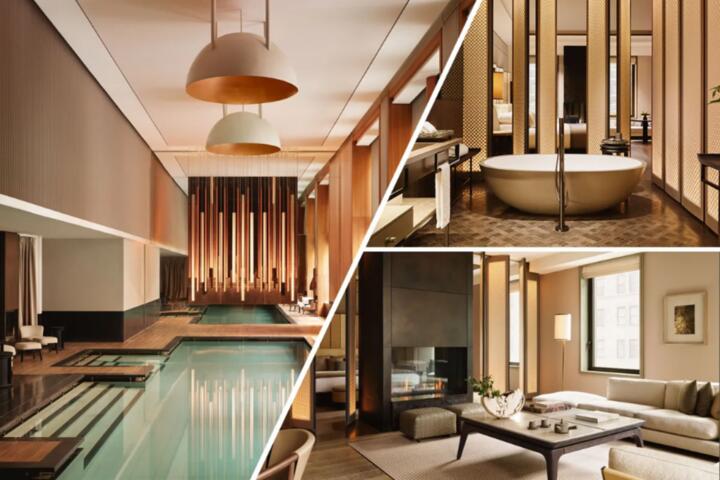
High-End Living Logic
The New York luxury hotel market operates on a scale of scarcity and hyper-personalization. Unlike standard five-star rooms, the "trophy suites" in Manhattan function as private estates with the logistical support of a global brand. These spaces often span multiple floors, offering 360-degree views of Central Park or the Chrysler Building.
In practice, booking these suites involves "quiet inventory" — many are not available on public booking engines and require direct negotiation with a Director of Sales. For instance, the demand for multi-bedroom configurations in Midtown has risen by 18% since 2022, driven by a preference for "bubbled" family travel.
According to recent STR (Smith Travel Research) data, the Average Daily Rate (ADR) for the top 0.1% of New York inventory now exceeds $15,000 per night, with peak season rates for flagship penthouses reaching $75,000.
Elite Lodging Gaps
A common mistake among affluent travelers is prioritizing square footage over service density. A 4,000-square-foot suite is a liability if the service elevator access is slow or the butler-to-guest ratio exceeds 1:2. Inadequate soundproofing in older "landmark" buildings is another frequent disappointment for guests paying premium rates.
Privacy breaches often occur because properties fail to provide discrete entry points. For high-profile individuals, a lobby walkthrough is a security failure. Real-world situations have seen diplomatic delegations cancel stays because a hotel’s freight elevator wasn't properly cleared for private arrival.
Furthermore, many suites lack modern technical infrastructure. It is a significant pain point when a $30,000-a-night suite has lagging Wi-Fi or complex lighting systems that require a manual to operate. This friction erodes the luxury experience immediately upon check-in.
Strategic Selections
Priority on Vertical Privacy
Look for suites with dedicated elevators or those located on "setback" floors. The Mark Hotel’s Penthouse, for example, offers 12,000 square feet of privacy. This works because it eliminates foot traffic from other guests on the same level.
In practice, use tools like the Forbes Travel Guide or the LQA (Leading Quality Assurance) standards to verify privacy protocols. Properties like The Aman New York utilize private arrivals that bypass the main lobby entirely, ensuring total anonymity from street to suite.
Assessing Butler Services
True luxury is defined by anticipatory service, not just response time. The St. Regis New York set the gold standard with its 24-hour butler service. This is effective because it offloads cognitive load from the guest, from garment pressing to itinerary management.
A quantifiable result of high-tier butlerage is the "unpacking efficiency." A dedicated team can have a 10-piece luggage set organized within 45 minutes of arrival, a standard metric for top-tier concierge operations.
Architectural Significance
The value of a suite often lies in its outdoor space, a rare commodity in Manhattan. The Ty Warner Penthouse at the Four Seasons (currently in transition) features four glass balconies cantilevered over the city. This provides a sensory experience that interior design cannot replicate.
When evaluating a suite, calculate the "terrace-to-total-area" ratio. Anything above 15% is considered exceptional for New York City real estate, providing a private sanctuary amidst the urban density.
Technological Integration
Modern luxury requires seamless "Invisible Tech." Systems like Savant or Crestron should manage climate, shades, and media via a single intuitive interface. The Equinox Hotel Hudson Yards utilizes medical-grade air filtration and sound-masked walls.
This focus on sleep science and wellness tech has led to a 25% increase in guest satisfaction scores regarding "rest quality." It moves the suite from a place of stay to a place of recovery.
Bespoke Culinary Access
The most expensive suites now offer in-suite kitchens designed for Michelin-starred chefs. The Baccarat Hotel provides a dedicated sommelier service for its top-tier suites. This allows for private entertaining without the public exposure of a restaurant dining room.
On average, guests in the "Royal" or "Presidential" tiers spend an additional $2,500 per day on customized in-room dining experiences, highlighting the shift toward domestic-style entertaining within the hotel.
Luxury Performance Cases
The Carlyle, a Rosewood Hotel, recently renovated its Empire Suite. A high-profile family required a long-term stay during a home renovation. By merging the suite with adjacent rooms, the hotel created a 5,000-square-foot secure compound.
The result was a 6-month residency with a total revenue exceeding $2 million for the property. This demonstrates the "flexible inventory" model where luxury hotels act as temporary high-security residences.
In another instance, a tech CEO utilized the Penthouse at the Whitby Hotel for a product launch. By using the private terrace for a 30-person event, the company saved on venue rental while providing attendees with an exclusive Upper Midtown backdrop, increasing social media engagement by 40% compared to traditional venues.
Suite Selection Criteria
| Feature | Standard Luxury | Ultra-Luxury (The "NYC Top 10") |
|---|---|---|
| Arrival | Main Lobby / VIP Desk | Private Underground / Freight Entry |
| Staffing | Shared Floor Butler | Dedicated 24/7 Suite Team |
| Views | Single Aspect (Street) | Dual or Triple Aspect (Park/River) |
| Dining | Room Service Menu | Chef-Prepared In-Suite Custom Menus |
| Space | 800 - 1,500 sq ft | 2,500 - 12,000 sq ft |
Avoiding Suite Failures
Never book a suite based solely on wide-angle lens photography. These photos often distort the actual flow of the room. Always request a floor plan with specific measurements of the ceiling heights, as New York’s older buildings often have "dead zones" with low clearance.
Another mistake is overlooking the "hidden costs." High-end suites often have significant service charges and "amenity fees" that are not always transparent. Ensure the quote includes all staffing fees for dedicated butlers to avoid a 20% surprise on the final invoice.
Finally, check the proximity of the suite to the service elevators. While you want fast service, being right next to the service bay results in noise from carts and staff communication at 6:00 AM, ruining the "private estate" illusion.
FAQ
What is the most expensive suite in NYC?
The Mark Penthouse is widely considered the most expensive, often priced at $75,000 per night. It covers the top two floors of the hotel and includes a massive rooftop terrace overlooking Central Park.
Do these suites include airport transfers?
Most suites at the $10,000+ per night level include complimentary round-trip transfers in a luxury SUV or sedan, such as a Rolls-Royce or Maybach, depending on the hotel’s fleet partnership.
Can you host events in these penthouses?
Yes, but most hotels require a separate "event contract" and a site fee if the guest count exceeds a certain limit (usually 10-15 people). This covers additional security and wear-and-tear.
Is security provided for high-profile guests?
Hotels provide general building security, but for personal protection, they coordinate with the guest’s private team. Top suites often have a "security room" nearby for bodyguards to stay in close proximity.
Are these suites pet-friendly?
Many top-tier New York hotels, like The Pierre or The Lowell, are famously pet-friendly, offering custom pet menus and walking services, though a significant non-refundable cleaning deposit is standard.
Author’s Insight
In my years of auditing high-end hospitality, I’ve found that the price tag rarely reflects the "gold-leaf" decor, but rather the hotel's ability to say "yes" to impossible requests. I once saw a concierge at a top Midtown hotel source a specific vintage of Bordeaux within two hours on a Sunday evening for a suite guest. My advice for anyone booking these spaces is to engage with the Head Concierge at least two weeks before arrival; the value of the suite is unlocked through the relationships of the staff, not just the thread count of the sheets.
Summary
Navigating the world of New York’s most expensive suites requires looking beyond the superficial aesthetic to the operational backbone of the property. When selecting a high-tier residence, prioritize privacy infrastructure, service ratios, and technological reliability. To ensure a seamless stay, always request a detailed floor plan, confirm the specific butler-to-guest ratio, and utilize the concierge team early to customize your environment. In the hyper-competitive Manhattan market, true luxury is the total absence of friction.