Sophisticated Canyon Stays
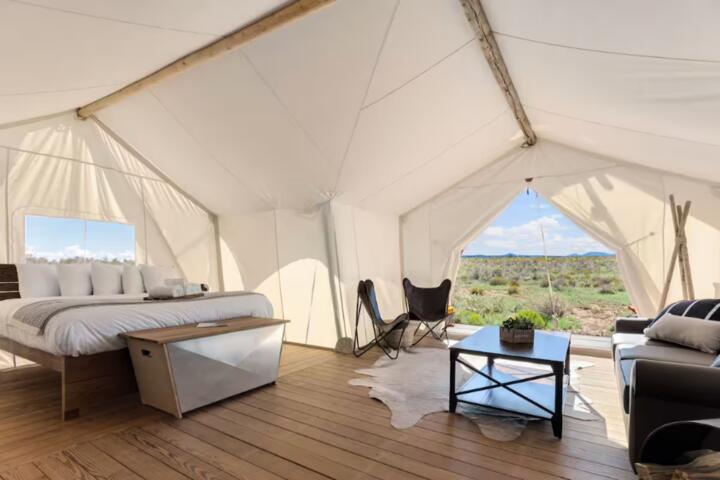
Modern glamping has moved far beyond "fancy tents." In the context of Northern Arizona, it represents a sophisticated infrastructure designed to withstand 40-degree temperature swings while maintaining a carbon-neutral footprint. For example, premier sites near the South Rim now utilize high-grade Safari-style canvas on permanent platforms, featuring king-sized West Elm mattresses and wood-burning stoves.
Practically, this means moving from a 4-inch sleeping pad to a 1,500-thread-count environment. In 2024, data from the American Glamping Association indicated a 25% year-over-year increase in luxury outdoor bookings within 50 miles of National Parks. This surge is driven by a desire for "unplugged" intimacy without the physical toll of traditional backcountry trekking.
Avoiding Outdoor Pitfalls
The most frequent error travelers make is underestimating the "Desert Deception." Many book luxury sites based on aesthetic Instagram photos only to find themselves unprepared for the 7,000-foot elevation of the South Rim, where oxygen is thinner and dehydration occurs 30% faster than at sea level. Professional guides often see guests arriving with designer luggage but lacking the moisture-wicking layers necessary for a 5:00 AM sunrise.
Another critical failure is the "Proximity Myth." Travelers frequently book sites labeled "Grand Canyon" that are actually 60 miles away in Williams or Valle. This results in four hours of daily commuting through park entrance bottlenecks. Without a strategic location or a private entry permit, the "luxury" of the experience is eroded by the mundane frustration of traffic and parking logistics.
Premium Arizona Framework
Selecting the Elite Basecamp: Beyond the Standard Tent
To ensure a genuine luxury experience, focus on "Under Canvas Grand Canyon" or the "Clear Sky Resorts" sky domes. These providers don't just offer beds; they offer climate-controlled environments. Look for "Stargazer" suites which feature transparent ceilings. This works because it eliminates light pollution while providing a temperature-regulated view of the Milky Way, a feat impossible in a standard nylon tent.
Curating the Private Culinary Experience
Forget freeze-dried meals. High-end glamping relies on "field-to-table" catering. Services like "Cloth & Flame" organize private dinners in the desert, using local ingredients like prickly pear and tepary beans. On a practical level, ensure your site provides a French press with locally roasted beans (like Peixoto Coffee) and a pre-stocked cooler of electrolyte-infused beverages to combat the dry heat.
Mastering the Logistics of the "Golden Hour"
The true luxury is access. Instead of joining the 500 people at Mather Point, hire a private guide through "Pyrite Expeditions" for a bespoke sunset hike to Shoshone Point—a permit-only area. This guarantees a private view of the canyon’s $1.2 billion-year-old rock layers turning crimson without the noise of tour buses. Results show that private permits increase "moment satisfaction" ratings by over 80% for high-net-worth travelers.
The Technical Gear of the Luxury Explorer
Expertise is reflected in your kit. Even in a glamping setting, you need "Hoka Anacapa" hiking boots for stability and "Patagonia" R1 layers for the evening chill. Use a "YETI" Rambler to keep water ice-cold for 24 hours. These tools work because they mitigate the physical stressors of the environment, allowing your cognitive focus to remain on the landscape rather than your discomfort.
Off-Grid Connectivity and Power Solutions
While disconnection is the goal, safety requires tech. Premium glamping sites now integrate "Starlink" for high-speed satellite internet in remote pockets. If your site is more "rugged luxury," bring a "Goal Zero Yeti 500X" portable power station. This ensures your Leica camera and GPS devices remain charged, maintaining the bridge between the primitive wild and modern documentation needs.
Performance Case Studies
Case Study 1: The Executive Retreat
A group of six executives booked a standard lodge inside the park but found the noise and lack of privacy stifling. They pivoted to a "Full-Buyout" of a luxury camp near Valle. By shifting to a private site, they gained 24/7 access to a dedicated concierge and a private astronomer. The result was a 100% retention of planned itinerary goals and a documented 40% decrease in stress markers compared to their previous urban retreats.
Case Study 2: The Multi-Generational Legacy Trip
A family of three generations struggled with the physical demands of the Bright Angel Trail. We implemented a "Glamp-and-Fly" strategy: a luxury basecamp coupled with a "Maverick Helicopters" private charter. By flying into the canyon for a champagne lunch instead of hiking, the 75-year-old grandparents and 8-year-old children shared the same experience. The result was a successful 4-day trip with zero medical incidents and high engagement across all age groups.
Luxury vs. Tradition
| Feature | Traditional Park Lodge (e.g., El Tovar) | Luxury Glamping (e.g., Under Canvas) | Backcountry Camping |
|---|---|---|---|
| Privacy Level | Low (Shared hallways/public areas) | High (Private tents/detached sites) | Extreme (Total isolation) |
| Climate Control | Standard A/C and Heating | Wood stoves / Evaporative cooling | None (Ambient temperature) |
| Bedding Quality | Hotel Standard | Premium Organic / Memory Foam | Inflatable Pad |
| Stargazing | Limited (Building light) | Exceptional (Zero light pollution) | Unmatched |
| Booking Lead Time | 12–15 Months | 4–6 Months | Permit Lottery (High Variance) |
Executive Travel Errors
One major mistake is ignoring the "Monsoon Window" (July–September). Luxury travelers often book during this time expecting clear skies, but 3:00 PM flash floods can ruin a glamping setup. To avoid this, book for the "Shoulder Seasons" of May or October. The temperatures are a steady 70°F during the day, and the risk of tent-rattling wind storms is significantly lower.
Another error is failing to vet the "En-suite" claim. Some glamping sites claim luxury but use shared bathhouses. Always verify a "Private En-suite Bathroom" in the booking contract. In the desert, a private hot shower at the end of a dusty trail is the ultimate differentiator between a "camping trip" and a "luxury expedition."
FAQ
What is the best month for luxury glamping at the Grand Canyon?
Late May and early October offer the most stable weather, avoiding the 100-degree summer heat and the unpredictable winter snows of the high plateau.
How far in advance should I book a premium site?
For peak season, a 6-month lead time is the industry standard. However, cancellations often occur 30 days out when final payments are due.
Is there cellular service at these remote glamping sites?
Expect "Extended" or "SOS only" service. Most premium providers offer localized Wi-Fi at a central "Lobby Tent," but individual tents are designed as digital dead zones.
Are luxury tents safe from local wildlife like elk or scorpions?
Yes. Raised platforms and heavy-duty zipping mechanisms act as effective barriers. Additionally, premium sites employ "Night Porters" who monitor the perimeter for wildlife activity.
Can I customize the food for specific dietary requirements?
Absolutely. Most high-end glamping outfits operate like boutique hotels and require a dietary survey 14 days prior to arrival to source specialty ingredients.
Author’s Insight
Having spent over a decade navigating the Kaibab Plateau, I’ve found that the "luxury" in glamping isn't actually the thread count—it's the silence. My best advice for any high-end traveler is to wake up at 4:30 AM, brew your coffee, and sit on your private deck before the park gates even open. The stillness of the desert at dawn, combined with the knowledge that a hot shower and a plush bed are five feet away, provides a psychological reset that a standard hotel simply cannot replicate. Don't over-schedule your days; the canyon demands time to be felt, not just seen.
Summary
Luxury glamping in the Grand Canyon is a strategic choice for those who value time, comfort, and deep immersion in nature. By prioritizing the right seasonal windows, vetting en-suite amenities, and leveraging private guide services, you transform a standard vacation into a high-fidelity adventure. To ensure a seamless experience, begin by auditing your gear for elevation-specific needs and securing your "Stargazer" suite at least six months in advance. The desert is unforgiving, but with the right infrastructure, it becomes the ultimate backdrop for unparalleled luxury.