Premium Coastal Exploring
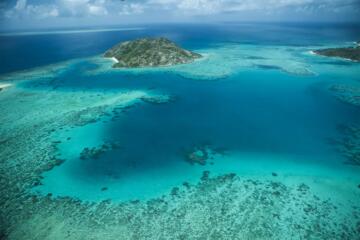
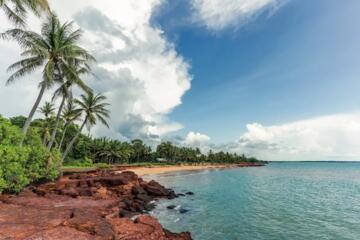
Expedition cruising in Northern Australia is not a standard vacation; it is a sophisticated logistical operation designed to grant access to a landscape that remains largely inaccessible by land. The vast coastline stretching from Broome to Darwin, and further east to the Tip of Australia, is defined by dramatic sandstone gorges, ancient Aboriginal rock art galleries, and a predatory ecosystem where saltwater crocodiles rule the estuaries. Unlike traditional Mediterranean or Caribbean cruises, these voyages utilize small, high-tech vessels equipped with shallow drafts and heavy-duty inflatable tenders (Zodiacs) to navigate narrow river systems.
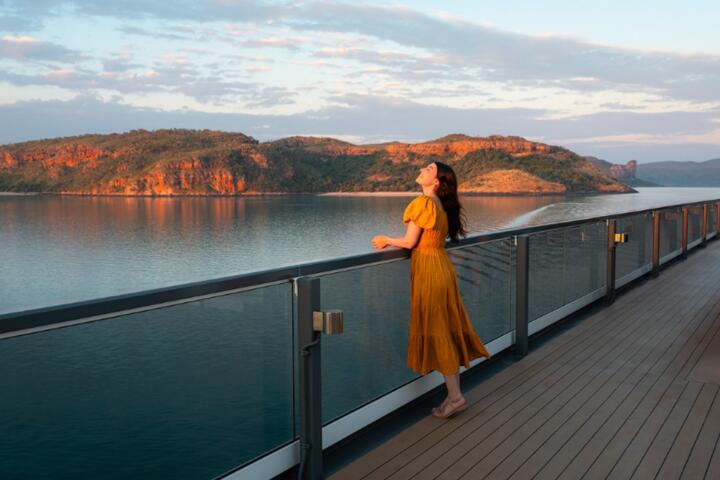
In practice, this means waking up to a 100-meter-high twin waterfall at King George River and, by afternoon, sipping vintage Krug on a sun deck while a marine biologist explains the geological shift that created the horizontal falls of Talbot Bay. In 2026, the demand for these "luxury-frontier" experiences has surged by 35% compared to pre-pandemic levels. Market data indicates that travelers are increasingly prioritizing "isolation as luxury," paying upwards of $1,500 to $2,500 per person per night for the privilege of being one of only 100 people in a thousand-square-mile radius.
A key fact to consider: The Kimberley region experiences some of the largest tidal ranges in the world, often exceeding 11 meters (36 feet). This creates the unique "Horizontal Falls" phenomenon, where massive volumes of water are forced through narrow cliff gaps. Navigating this safely requires not just a ship, but a master mariner’s precision and a fleet of high-powered expedition craft.
Remote Cruising Hurdles
The most significant mistake travelers make is underestimating the "expedition" aspect of the journey. Many book based on cabin aesthetics alone, only to find the ship lacks the technical equipment—like dual-engine Zodiacs or onboard helicopters—necessary to see the most iconic sights. Without a shallow draft, a ship might be forced to anchor miles offshore, turning what should be a 10-minute transit into an hour-long, uncomfortable ride through choppy seas.
Timing is another critical failure point. Booking a "Kimberley Icons" cruise in late September might offer lower prices, but the thundering waterfalls seen in brochures will have slowed to a trickle, and the heat can become oppressive, exceeding 40°C (104°F). Conversely, arriving too early in the season (March) risks cancellations due to late-season cyclones. The consequence of poor timing isn't just discomfort; it’s missing the very spectacles—like the four-tiered Mitchell Falls—that justify the five-figure price tag.
Finally, there is the issue of cultural permits. Northern Australia is a patchwork of Traditional Owner estates. Standard cruise lines often lack the deep-rooted relationships with local communities required to visit "restricted" rock art sites like the Wandjina and Gwion Gwion galleries. This results in a "sanitized" experience where guests only see the most commercialized locations, missing the profound spiritual connection that defines this region.
Seamless Expedition Tips
To ensure an elite experience, prioritize ships that feature "X-Bow" technology or advanced stabilization systems. The Joseph Bonaparte Gulf can be notoriously "rolly," and a stabilized hull ensures that fine dining remains an enjoyable experience rather than a balancing act. Operators like Scenic Luxury Cruises & Tours with the Scenic Eclipse II offer the pinnacle of this technology, including dual onboard helicopters that provide the only way to view the Bungle Bungle Range comfortably from the coast.
Prioritize Vessel Specification Over Brand Name
Look for a guest-to-crew ratio of at least 1:1.5. In the remote North, service isn't just about pouring wine; it’s about having enough expedition guides to split the group into "active" and "leisure" tiers. If you are an avid hiker, you want a guide who can lead a 4km trek to the top of a plateau; if you prefer photography, you need a guide who will hold a Zodiac steady in a current for 20 minutes to get the perfect crocodile shot.
Secure All-Inclusive Private Aviation Transfers
The logistics of reaching Broome (BME) or Kununurra (KNX) can be grueling. The best premium packages now include private charter flights from major hubs like Perth or Sydney. Silversea Expeditions often bundles these "door-to-door" services, which include private executive transfers from your home to the airport. This eliminates the "travel fatigue" that often plagues the first two days of a remote voyage.
Invest in Expert-Led Educational Programming
A luxury expedition is only as good as its Expedition Team. Ensure your chosen cruise features at least one PhD-level geologist, a professional photographer, and an Indigenous liaison officer. Ponant, for instance, frequently partners with National Geographic or the Australian Chamber Orchestra to provide intellectual and cultural depth that transcends simple sightseeing.
Optimize for "Wet" and "Dry" Season Transitions
The "Sweet Spot" for Northern Australia is May through July. This is the "Dry Season" where humidity is low, the skies are a constant cobalt blue, and the waterfalls are still pumping from the recent "Wet." If you are specifically interested in the migratory patterns of Humpback whales, aim for the August-September window, particularly around the Camden Sound Marine Park, a crucial calving ground.
Leverage Onboard Technology for Exploration
Modern luxury ships are essentially floating laboratories. Systems like Seabourn’s custom-built submersibles (on their Venture-class ships) or Scenic’s underwater ROVs allow guests to see what lies beneath the silt-heavy waters of the North. While you won't be diving in crocodile-infested waters, these tools provide a rare look at the coral structures of the Rowley Shoals or the sunken hulls of WWII wrecks near Darwin.
Field Case Studies
Case Study 1: The "Heli-Hiking" Success
A high-net-worth couple booked a 10-day Kimberley voyage but had limited mobility. By choosing a vessel with an onboard helicopter (Scenic Eclipse II), they were able to bypass the grueling 4-hour trek to Mitchell Falls. The ship’s flight operations team coordinated a private landing at the top of the falls, followed by a gourmet picnic prepared by the ship’s executive chef.
Case Study 2: The Cultural Immersion Pivot
An American family wanted to see authentic Aboriginal art but found most sites crowded. Their expedition leader, a former park ranger with 20 years of experience, utilized the ship’s small draft to enter a minor tributary in the Prince Regent River. Using local permits, they visited a non-commercialized rock art site with a traditional owner who explained the "Wandjina" spirits.
Operator Comparison
| Operator | Flagship Ship | Capacity | Specs & Service |
|---|---|---|---|
| Scenic Luxury | Scenic Eclipse II | 200 Guests | Helicopters, Butler service, All-inclusive |
| Silversea | Silver Cloud | 200 - 254 | Door-to-door service, Classic elegance |
| Ponant | Le Laperouse | 184 Guests | Chic design, Open bar, NatGeo partners |
| Coral Exp. | Coral Adventurer | 120 Guests | Authentic AU vibe, Education focus |
Frequent Pitfalls
1. Ignoring the "Zodiac" Factor: Some lines use older, smaller tenders that lack sunshades or sturdy ladders. In the 35°C heat of Arnhem Land, 3 hours in an open boat can lead to heat exhaustion. Always ask about the age and configuration of the expedition fleet.
2. Packing for a "Mission": High-end travelers often bring formal wear. In the North, even on Silversea, the "Kimberley Casual" rule applies. Invest in high-quality, moisture-wicking linen and professional-grade polarized sunglasses to see through the water's surface glare.
3. Overlooking Pre-Cruise: Don't fly into Broome on the day of departure. The "Pearl of the North" requires at least two days of acclimatization at a property like Cable Beach Club Resort & Spa to truly transition into the "Kimberley Time" mindset.
FAQ
Is it safe to travel in crocodile-infested waters?
Yes, provided you are on a professional expedition. These ships use specialized Zodiacs with high gunwales. Guides are trained in "Croc-Wise" protocols, and landings are only conducted in scouted, safe zones. Swimming is strictly prohibited except in specific freshwater pools at the top of waterfalls where crocodiles cannot reach.
Which is better: Kimberley or Arnhem Land?
The Kimberley is for dramatic geology and massive waterfalls. Arnhem Land and Cape York are for those seeking deep Indigenous culture, art, and world-class fishing. If you want "grandeur," choose the Kimberley. If you want "connection and story," choose Arnhem Land.
Do I need to be physically fit for an expedition?
Most luxury lines offer "tiered" excursions. You can choose a "Gentle" option (scenic Zodiac cruising) or "Active" (climbing the rocks at Raft Point). However, you should be comfortable embarking/disembarking a small boat from a floating platform.
What is the most exclusive suite on these ships?
On the Scenic Eclipse II, it is the Owner’s Penthouse Suite (Suite 901), featuring a 60-square-meter terrace. On Silversea, look for the Grand Suite, which offers the best forward-facing views of the coastline.
What should my budget be for a 10-day trip?
For a truly premium experience including flights, a top-tier suite, and pre-cruise luxury accommodation, expect to budget between $18,000 and $35,000 USD per person.
Author’s Insight
Having navigated these waters multiple times, I can tell you that the most "luxurious" moment isn't the caviar service—it’s the silence. There is a specific point in the Buccaneer Archipelago where the ship turns off its engines, and all you hear is the ancient pulse of the tide. My best advice: don't get distracted by the onboard spa. Spend every possible minute on the observation deck or in a Zodiac. The Kimberley is a sensory overload that requires your full presence to appreciate why it is often called the "Antarctica of the Tropics."
Summary
Choosing a premium cruise expedition to Australia’s remote North is an investment in accessing one of the final frontiers of the natural world. To maximize your return, move beyond generic luxury and focus on the technical specs of the vessel, the expertise of the expedition team, and the seasonal timing of the tidal cycles. Secure your 2026/2027 berths at least 12 months in advance, prioritize all-inclusive air-and-sea packages, and ensure your itinerary includes the "Big Three": King George Falls, Montgomery Reef, and the Horizontal Falls.