Evolution of Maldives
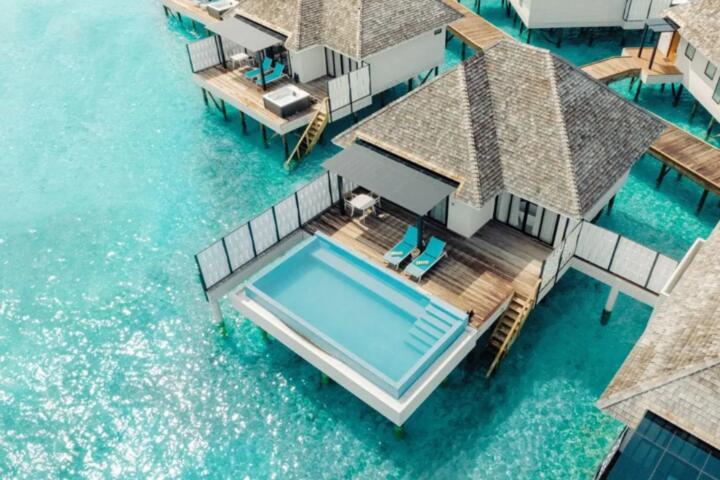
The concept of the overwater bungalow has transformed from simple thatched-roof huts into multi-story architectural marvels that rival Manhattan penthouses. In the Maldives, geography dictates the design; with 99% of the nation consisting of water, the "land" is effectively the lagoon. Modern engineering now allows for massive structures built on reinforced concrete stilts, capable of supporting private 15-meter infinity pools and retractable roofs.
Practically, this means the distinction between a $1,000-a-night villa and a $15,000-a-night estate lies in the "lagoon footprint." For example, top-tier properties now offer over 1,000 square meters of living space entirely over water. A key technical fact: the most stable overwater villas are built on the inner side of the reef (the "leeward" side) to minimize vibration from wave action, a detail often missed by first-time visitors.
Data suggests that the Maldives accounts for nearly 25% of the world's total overwater inventory. However, only about 5% of these qualify as "Ultra-Luxury" based on the 1:3 staff-to-guest ratio and the inclusion of dedicated, 24-hour butler services known as "Friday" or "Thakuru" service.
High-End Villa Pitfalls
Many travelers rely on photoshopped marketing materials, only to find their "private" sanctuary is overlooked by a public jetty or a neighboring villa. A common mistake is ignoring the seasonal wind patterns (the Iruvai and Hulhangu monsoons). Selecting a sunset-facing villa during a specific season might mean facing 30-knot winds that make the outdoor deck unusable.
Privacy breaches are the most significant pain point. In lower-tier luxury resorts, villas are often spaced only 5 to 8 meters apart. This proximity results in "acoustic leakage," where you can hear conversations from the next unit. For a high-stakes vacation or honeymoon, this lack of isolation destroys the sense of exclusivity.
Furthermore, structural maintenance is a hidden issue. The salt-heavy environment erodes wood and metal rapidly. If a resort hasn't undergone a structural renovation in the last 3-4 years, guests often encounter "spongy" floorboards or faulty AC systems struggling against the tropical humidity. These technical failures can turn a premium stay into a series of maintenance disruptions.
Superior Stay Strategy
Prioritize Bi-Level Structures and Retractable Architecture
Modern luxury is defined by the ability to control your environment. Properties like Soneva Jani have pioneered the retractable roof in the master bedroom, allowing for stargazing at the touch of a button. Look for villas that offer a second-story terrace; this elevation provides a 360-degree view of the atoll and significantly better airflow than ground-level decks.
Evaluate the Water-to-Living Area Ratio
An elite bungalow should feature a private pool that is at least 12 meters in length. Anything smaller is a "plunge pool" and lacks functional utility for swimming. At the Gili Lankanfushi Private Reserve—the world’s largest overwater villa at 1,700 square meters—the distance from the master suite to the water is maximized to ensure total acoustic privacy from any boat traffic.
Demand Dedicated, Unshared Butler Services
In the ultra-luxury segment, your butler should not be managing more than two villas. At Cheval Blanc Randheli, the Alchemists (butlers) are trained by LVMH standards to anticipate needs before they are voiced. This includes setting up "pop-up" cinemas on your deck or organizing deep-sea fishing trips on 60-foot Azimut yachts.
Analyze Lagoon Depth and Marine Life Access
The "luxury" of a villa is tied to the health of its house reef. Check for resorts located in UNESCO Biosphere Reserves, such as those in the Baa Atoll (e.g., Anantara Kihavah). These villas often feature glass-bottom floors in the living area or bathroom. Ensure the water depth under your villa at low tide is at least 1.5 meters to allow for safe swimming directly from your ladder.
Examine the Culinary Integration
True luxury allows for the "resort to come to the villa." The Waldorf Astoria Maldives Ithaafushi offers the "Stella Maris" villas, which are accessible only by boat. These require a sophisticated in-villa dining infrastructure, including a full pantry and separate entrance for service staff to ensure your privacy remains uninterrupted during meal prep.
Assess Technical Amenities and Connectivity
Despite being in the middle of the ocean, an elite villa must provide high-speed Starlink connectivity and integrated "Smart Home" systems (iPad-controlled lighting, climate, and entertainment). The Ritz-Carlton Maldives, Fari Islands, utilizes circular architectural designs that optimize natural light while using high-spec thermal glass to reduce energy consumption by the AC units.
Excellence Case Studies
Case Study 1: The Multi-Generational Family Retreat. A high-profile client required a 4-bedroom overwater solution for 8 people. By selecting the John Jacob Astor Estate at St. Regis Vommuli (the largest of its kind in the Maldives), they secured 1,540 square meters of space. The result was a 40% increase in "togetherness time" compared to separate villas, while the dedicated wellness room and cinema provided on-site entertainment that bypassed the need for public resort areas.
Case Study 2: The Privacy-Centric Executive. An executive seeking total anonymity chose the Gili Lankanfushi Private Reserve. Because this villa is a standalone structure 300 meters from the main island, accessible only by private boat, the guest reported zero sightings of other tourists during a 10-day stay. This 100% isolation rate is the benchmark for "Top-Tier" overwater living.
Premier Estates Table
| Resort Property | Primary Villa Type | Square Footage | Unique Technical Feature | Best For |
|---|---|---|---|---|
| Soneva Jani | Chapter Two Water Reserve | 1,200+ sq ft | Retractable roof & water slide | Innovative Design |
| Waldorf Astoria Ithaafushi | Stella Maris Ocean Villa | 5,800+ sq ft | Duplex, boat-only access | Total Seclusion |
| The Ritz-Carlton Maldives | The Ritz-Carlton Estate | 16,000+ sq ft | Circular minimalist architecture | Modern Aesthetics |
| Velaa Private Island | Romantic Pool Residence | 6,400+ sq ft | Personal gym & spa room | Fitness & Wellness |
| St. Regis Vommuli | John Jacob Astor Estate | 16,500+ sq ft | Three-bedroom duplex | Large Groups |
Avoid Booking Errors
One of the most expensive errors is booking a villa on the "sunrise side" if you value sleep. In the Maldives, the sun is intense by 6:30 AM. Unless your villa has 100% blackout motorized shutters, the heat and light will wake you. Always request a "Sunset Side" villa if you prefer cooler mornings and evening cocktails on the deck.
Another mistake is underestimating transfer times. A villa might look perfect, but if it requires a 60-minute seaplane flight that only operates during daylight hours, you might lose two days of your trip to travel logistics. If arriving late at night, look for luxury resorts in the North or South Malé Atolls that offer 24-hour luxury speedboat transfers (e.g., Jumeirah Olhahali Island).
Lastly, travelers often ignore the "Half Board" vs. "A La Carte" math. In ultra-luxury resorts, a single dinner for two can easily exceed $600. Checking if your villa package includes "Destination Dining" can save roughly $3,000 to $5,000 over a week-long stay without sacrificing the quality of the cuisine.
FAQ
What is the best time of year for calm waters around my villa?
The "High Season" from December to April offers the calmest lagoons and best visibility for snorkeling. During the "Wet Season" (May to October), you may experience swells that cause slight vibrations in overwater structures.
Are overwater villas safe for families with small children?
Most elite resorts (like Soneva or Velaa) provide removable safety netting for decks and plexiglass barriers. However, always confirm the "Child Waiver" policy, as some resorts require children to be over 12 for overwater stays.
Do all luxury villas have private pools?
In the "Ultra-Luxury" category, yes. If a villa does not have a private pool of at least 20-30 square meters, it is generally considered a standard luxury villa, not an elite estate.
How do I ensure my villa is truly private?
Use Google Earth or satellite views to check the jetty layout. Look for "end-of-jetty" villas, which have no foot traffic passing by and offer unobstructed 180-degree ocean views.
Is the water noise a factor for light sleepers?
Yes. If you are sensitive to sound, choose a villa built over a "sandy lagoon" rather than the "reef edge." Waves breaking against the reef are much louder than the gentle lapping of water in a shallow lagoon.
Author’s Insight
Having inspected dozens of these properties, I’ve learned that the price tag doesn’t always correlate with the "feeling" of luxury. To me, the ultimate luxury is a villa that disappears into the horizon. I always recommend looking for "unconnected" villas—those that require a boat for access. There is a psychological shift that happens when you are physically detached from the main island. My top tip: don't just look at the villa; look at the quality of the snorkeling gear and the marine biology programs provided. An expensive room is hollow if the reef beneath it is dead.
Summary
Selecting the most luxurious overwater bungalow in the Maldives requires a focus on structural privacy, staff-to-guest ratios, and seasonal environmental factors. Prioritize properties that offer over 1,000 square meters of space, dedicated butler service, and boat-only access for maximum seclusion. For the best experience, book sunset-facing villas in the Baa or Noonu Atolls during the dry season. Always verify the recent renovation dates of a resort to ensure the technical integrity of your overwater sanctuary.