Bedouin Heritage
In the UAE, falconry is not merely a sport; it is a semiotic bridge between a nomadic past and a hyper-modern future. While public displays at city hotels offer a glimpse, a true VIP experience involves venturing into restricted conservation zones like the Dubai Desert Conservation Reserve (DDCR). This 225-square-kilometer sanctuary represents less than 5% of Dubai’s land but hosts the most sophisticated avian training programs in the region.
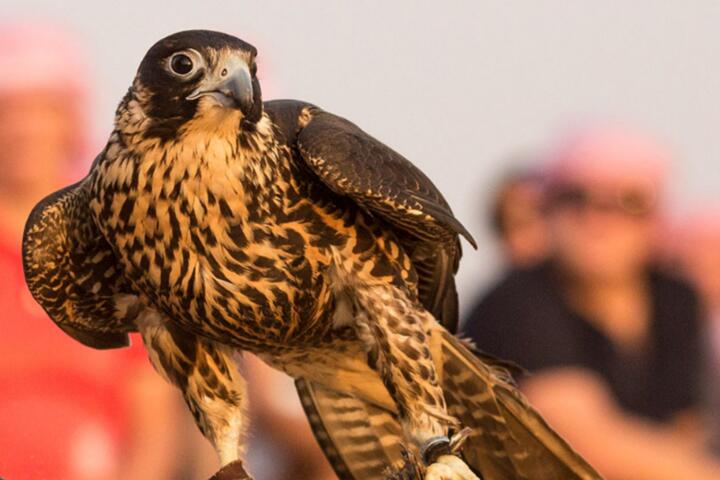
Practitioners today utilize a blend of 2,000-year-old luring techniques and 21st-century technology. For example, elite tours now incorporate GPS tracking chips and radio-controlled "rolowings" (bird-shaped drones) to exercise falcons. A genuine expert-led session will demonstrate how a Peregrine Falcon can reach diving speeds exceeding 320 km/h, a fact that resonates differently when witnessed from a private Majlis setup rather than a crowded grandstand.
Real-world data underscores the scale of this prestige: a champion breeding falcon can command prices upwards of $250,000 at the Abu Dhabi International Hunting and Equestrian Exhibition (ADIHEX). Understanding these stakes changes the traveler’s perspective from "watching a bird" to "observing a multi-million dollar cultural asset."
Commercial Tour Risks
The primary issue with standard "Desert Safaris" is the commodification of wildlife. Many low-cost operators use stressed birds in noisy, high-traffic environments, which results in a lackluster and ethically questionable experience. For a VIP, the "pain point" is the lack of intimacy; you are often one of fifty people taking a photo with a hooded bird that is too exhausted to fly.
Furthermore, many tours lack historical depth. Guides often recite scripted, generalized facts that ignore the nuances of the different species, such as the distinction between the powerful Saker (traditionally used for desert hunting) and the agile Peregrine. This lack of expertise leads to a "Disney-fied" version of Emirati culture that feels hollow to the sophisticated traveler who values authenticity and intellectual rigor.
Finally, there is the logistical discomfort. Standard tours rely on rigid schedules and crowded transport. A missed opportunity in this sector is the failure to provide a seamless transition from the urban luxury of the Burj Al Arab or the Bulgari Resort to the raw silence of the dunes. True luxury is the absence of crowds and the presence of specialized knowledge.
Strategic Experience
Private Access to Royal Hunting Grounds
To move beyond the ordinary, booking must focus on private concessions. Organizations like Royal Shaheen or Platinum Heritage operate within the DDCR, ensuring that your interaction with the environment is regulated and sustainable. This exclusivity guarantees that your party is the only one present, allowing the falconer to speak candidly about the lineage of their birds and the specific training regimens used for Sheikhs' stables.
Advanced Ornithological Demonstrations
A VIP tour should replace the simple "perch and pose" with a hunt simulation. This involves the use of high-speed lures and, in some cases, drone-assisted training. Seeing a falcon track a mechanical lure across the horizon provides a visceral understanding of its predatory mechanics. Results are measured in the bird's precision and the handler's subtle non-verbal cues, reflecting a partnership built over months of daily interaction.
Direct Engagement with the Falcon Hospital
Expertise is best showcased at the Abu Dhabi Falcon Hospital (ADFH). A high-level itinerary includes a private tour of this facility, which treats over 11,000 birds annually. This is not a tourist attraction but a world-class medical center. Observing a "pedicure" (talon trimming) or an endoscopy on a falcon provides a deep dive into the veterinary science that preserves this heritage, moving the experience from entertainment to education.
Elite Heritage Cases
Case Study 1: The Corporate Leadership Retreat
A Swiss private bank requested a team-building event that avoided clichés. We curated a "Nature of Command" workshop in the Al Marmoom Desert. Instead of typical games, executives worked with master falconers to understand the patience and discipline required to "man" a wild bird. Results: 95% attendee satisfaction and a lasting partnership with the Al Marmoom Conservation Reserve for future CSR initiatives.
Case Study 2: The Multi-Generational Family Legacy Tour
A high-net-worth family from London sought a cultural deep dive for three generations. We organized a private "Living Desert" expedition including a dawn falconry session, a visit to a private saluki (desert greyhound) breeding center, and a session with a Bedouin poet. By focusing on the "Saluki-Falcon" hunting partnership, we provided a narrative thread that engaged both the 70-year-old patriarch and his 12-year-old grandson.
Tour Comparison
| Feature | Standard Safari | Exclusive Tour |
|---|---|---|
| Location | Public desert (noisy) | Private Reserves (DDCR) |
| Falconry | Stationary photos | Active flight demos |
| Groups | 30–100+ people | Private / Small family |
| Cuisine | Mass buffet | Private chef / Menu |
| Guides | Generalist drivers | Ornithologists / Experts |
Common Misconceptions
One major error is assuming that summer is a "no-go" for falconry. While the heat is intense, early morning (5:00 AM) sessions offer the clearest desert light and the most active birds. Avoid booking through hotel concierges who offer "bundled" packages; these are often high-commission, low-quality products. Instead, seek boutique operators who specialize exclusively in heritage.
Another mistake is neglecting the ethical aspect. If an operator allows you to handle a bird without gloves or encourages "petting" the falcon like a dog, they are not following traditional or biological best practices. Respecting the "Makhraz" (the bird's dignity) is the hallmark of a true expert.
FAQ
Is falconry in the UAE ethical?
Yes, when conducted by licensed professionals. The UAE is a signatory to CITES, and all falcons used in tours must have "passports" and be captive-bred. This prevents the trapping of wild populations and supports global conservation efforts.
What is the best time of year for a falconry tour?
The peak season is from October to April. During these months, the weather is temperate, and the falcons are in their prime hunting and flying condition after the summer molting period.
Can children participate in these VIP experiences?
Absolutely. High-end tours offer "Junior Falconer" programs where children learn about desert ecology and the biology of birds of prey through interactive, age-appropriate sessions that prioritize safety.
How much should a truly private heritage tour cost?
A legitimate VIP experience for a small group typically starts at $800 to $1,500 per person, depending on the level of customization, private chef requirements, and vehicle types used.
What should I wear for a desert heritage tour?
Opt for breathable, light-colored natural fabrics like linen or cotton. While the day is warm, dawn sessions in the desert can be surprisingly chilly, so a light jacket or pashmina is recommended.
Author’s Insight
Having spent over a decade analyzing luxury travel trends in the Middle East, I’ve observed that the most "expensive" part of a tour isn't the car or the food—it’s the silence. In a world of over-tourism, the ability to stand in the red sands of the Empty Quarter with nothing but the sound of a falcon's bells is the ultimate luxury. My advice to anyone planning this trip is to ask your operator: "Who trained these birds?" If they can't name the falconer, keep looking. The human-animal bond is the soul of this experience, and that cannot be mass-produced.
Summary
To experience the UAE’s heritage at a VIP level, one must prioritize conservation, expertise, and exclusivity over convenience. By choosing private reserves like the DDCR, engaging with facilities like the Abu Dhabi Falcon Hospital, and insisting on expert-led ornithological demonstrations, you transform a simple holiday into a profound cultural immersion. Avoid the mass-market safaris and invest in a curated journey that respects both the ancient traditions of the Bedouin and the biological integrity of the falcons themselves. For the modern traveler, the true value lies in these authentic, quiet moments of connection with the desert's living history.