Migration Patterns And Safari Timing
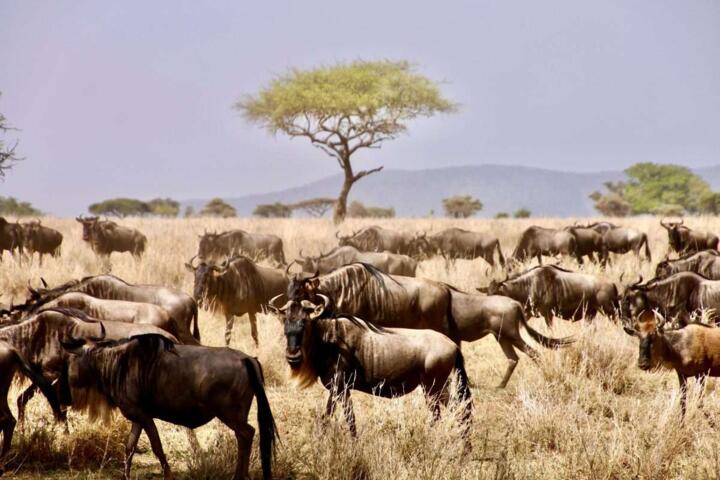
Safari timing follows animal movement. When large herds migrate, they change grazing pressure, vegetation height, and the distribution of water, which then reshapes predator hunting routes. In many savanna systems, the same migration also creates predictable “pressure points” where animals pause to drink, cross rivers, or feed on new growth.
For travelers, the practical question becomes: which part of the migration cycle matches the itinerary? A week spent during the early movement phase can look different from the same week later, even within the same region. The difference often shows up in where you find herds, how frequently you see river crossings, and whether predators are actively stalking or simply waiting near cover. Weather adds another layer; rainfall can delay or accelerate movement by changing forage quality and water access.
Some operators describe timing using broad seasons, but migration is not a single date. It is a sequence of decisions by animals responding to forage, water, and herd density. That sequence can shift year to year, so the best planning approach uses multiple signals rather than one forecast.
What People Often Get Wrong
Many safari plans rely on fixed month labels, then treat sightings as if they were scheduled. Migration does not behave like a train timetable. Even when the overall seasonal pattern holds, local timing can shift because rainfall patterns differ across the landscape.
Another common mistake is assuming that “migration” means one continuous movement line. In reality, herds split, regroup, and linger. Predators also adjust; lions and cheetahs may follow prey, but they also respond to cover, wind direction, and the availability of easier kills. If you arrive when prey density is low in your specific area, predator sightings can drop even if migration is happening somewhere else.
Supporting technologies and dependencies matter for planning. Satellite-derived vegetation indices and rainfall estimates can indicate where forage is greening, but they do not directly show animal location. GPS collar data from research projects can reveal movement corridors, yet those corridors may not match the exact route a particular herd takes in a given year. Even a well-known migration route can shift when waterholes fill or when river flow changes.
Travelers also underestimate how park boundaries and access roads affect what you can see. Two lodges can be in the same country and still experience different sighting patterns because of where vehicles are allowed to drive, where guides can position, and which areas are open during certain times of day. A migration can be “on,” while your specific viewing zones remain outside the densest movement.
How To Time Your Safari
Use Multiple Seasonal Signals
Start with the migration phase you want to observe: early movement, peak concentration, or late dispersal. Then cross-check three signals: recent rainfall totals, vegetation greening patterns, and water availability near likely crossing points. Many travelers use public rainfall maps and park updates; a practical habit is to check them weekly rather than once.
For a concrete example, if a region receives delayed rains, herds may remain longer near existing water and feed on older grass. That can shift predator activity toward water-adjacent cover. If rains arrive earlier than expected, herds can move sooner, and river crossings may occur earlier in the day or in different stretches of a river.
When you compare itineraries, ask operators what they track beyond “season.” A useful answer names the type of data they review and how often they update routes. If they mention a tool version or a specific reporting cadence—such as “we review daily ranger notes and satellite vegetation updates every morning”—that detail helps you judge whether planning is reactive or scripted.
Match Your Route To Herd Density
Migration timing changes where herds concentrate. Instead of choosing a lodge based only on distance to a famous river, compare the itinerary’s daily driving radius and the areas it targets during morning and late afternoon. Herd density often drives predator encounters because predators hunt where prey is predictable.
Ask for a sample day plan for the exact dates you travel. A credible plan describes how the guide decides where to go: for example, “we start near known water sources, then move toward fresh grazing patches if herds shift.” If the plan relies on a single fixed location every day, it can fail when movement shifts by even a few kilometers.
In one anonymized scenario, a couple booked a seven-night trip expecting river crossings. Their lodge was near a crossing point, but the guide reported that herds were feeding farther from the river due to recent grass growth. The itinerary adjusted by shifting game drives toward the grazing corridor, and sightings improved even though the “headline” crossing was less frequent.
Plan Around Water And River Flow
Water availability often determines migration timing more than temperature. In dry periods, animals cluster around remaining waterholes, and predator sightings can become more consistent near those sites. In wetter periods, animals spread out because forage improves and water sources refill.
River flow adds complexity. Higher flow can widen crossings and change where animals choose to cross. Lower flow can expose banks and create different crossing routes. If your trip targets a river crossing, ask whether the itinerary accounts for variable flow and whether guides can reposition to alternate crossing stretches.
A mild frustration many travelers face: the itinerary brochure may show a single “crossing area,” while the guide’s decision-making depends on where the herd actually approaches. That mismatch is why you should ask how often the route changes during the week and what triggers those changes.
Use Realistic Expectations For Sightings
Even with good timing, migration does not guarantee dramatic scenes. Predators may hunt successfully away from vehicles, and herds may move at times when visibility is limited. A more reliable approach is to plan for a range of outcomes: grazing concentrations, predator patrols near cover, and occasional river activity rather than a single guaranteed event.
To judge expectations, ask how often the operator sees specific behaviors during the same season. Good answers use ranges and explain what changes those odds. For example, “river crossings are less frequent when flow is low and herds choose alternative banks” is more useful than a promise.
Some travelers also track their own observations. If you use a notes app like Apple Notes (iOS 18.0, for example) to log time, location, and behavior each day, you can compare patterns across the trip and ask sharper questions the next morning. That habit rarely changes the animals’ movement, but it improves your ability to interpret what you are seeing.
Educational Case Examples
Example 1: Delayed Rains Shift Concentrations
An anonymized group traveled in late summer to a savanna region where herds typically move toward greener grazing after rains. Rainfall arrived later than expected, and the guide reported that herds lingered near older grass and remaining waterholes. Predator sightings concentrated near water-adjacent cover rather than along the expected grazing corridor.
The itinerary still delivered frequent wildlife encounters, but the “migration moment” looked different: more time spent observing herd movement within a smaller area, fewer long-distance chases, and more predictable predator presence near the same water sources. The group benefited from daily route adjustments based on where herds were feeding, not where they were expected to be.
Example 2: Early Greening Pulls Movement Forward
A different anonymized traveler booked a mid-season safari expecting peak herd density. Early greening improved forage quality sooner, and herds moved faster than the operator’s initial assumptions. The first two days produced fewer sightings in the planned zones, then the guide shifted toward fresh grazing patches and alternate approach routes.
Within the week, the traveler saw more frequent herd clusters and more consistent predator tracking. The key difference was responsiveness: the guide used local observations and updated positioning rather than repeating the same route every day. The traveler also learned to treat “peak season” as a window, not a single point in time.
Safari Timing Checklist And Tradeoffs
| Decision Point | If You Choose This | Likely Outcome | What To Ask |
|---|---|---|---|
| Target Peak Herd Density | Travel during the window when herds concentrate | More predator tracking, fewer long drives to find animals | How do you adjust if herds arrive early or late? |
| Target River Activity | Plan around likely crossing periods | Occasional headline moments, variable frequency | Do you have alternate crossing stretches if flow changes? |
| Target Waterhole Concentrations | Travel during drier months when water limits spread | More consistent sightings near water, less “movement drama” | Which water sources are accessible and when? |
| Choose Flexible Itinerary | Allow route changes during the week | Better odds when migration timing shifts | How often does the route change, and why? |
If you want a quick decision support checklist, use this sequence: confirm the region and access rules, identify the migration phase you want, check recent rainfall and water conditions, then compare whether the itinerary can shift based on what guides observe. You save time, reduce noise, and the inbox stops winning.
Common Mistakes That Reduce Trust
Overconfident promises are a red flag. If a booking page claims a specific migration event on exact dates, treat it as marketing rather than planning. Migration timing depends on rainfall and water flow, so even well-informed operators cannot control it.
Another mistake is ignoring local constraints. Vehicle access, park rules, and road closures can limit where guides can position. If an operator does not discuss these constraints, you may discover them only after arrival, when route changes become harder.
Some travelers also compare itineraries using only “days in the park.” That metric misses the quality of decision-making. Two safaris with the same number of drives can differ if one plan includes daily route adjustments and the other repeats a fixed loop.
Finally, avoid planning based on a single source. A rainfall forecast can be wrong, and a research corridor can differ from a particular herd’s path. When you ask for evidence, request how the operator updates plans during the week and what observations they use to decide where to go next.
FAQ
When Is The Best Time For Migration Safaris?
The best time is the period when herds typically concentrate in the areas you can access, which depends on rainfall and water availability that vary year to year. Use recent rainfall and water conditions to refine month-based expectations.
Do River Crossings Happen Every Day?
River crossings occur intermittently and depend on herd approach, river flow, and bank conditions. Even during peak windows, crossings can be rare on some days and absent for stretches.
How Do Guides Adjust When Herds Move Early Or Late?
Guides usually reposition based on local sightings, waterhole activity, and where fresh grazing is forming. Ask how often routes change and what triggers those decisions.
Can Satellite Data Predict Where Animals Will Be?
Satellite vegetation and rainfall products can indicate where forage may improve, but they do not directly locate animals. They work best as context alongside ranger reports and on-the-ground observations.
What Should I Ask Before Booking A Safari?
Ask for the itinerary’s daily decision process, access constraints, and how the plan responds to shifting migration timing. Request examples of alternate routes used when herds do not appear in expected zones.
Author's Insight
Migration patterns shape safari timing through a chain of ecological effects: forage quality changes first, then water use concentrates animals, and predators follow prey density and cover. Travelers often treat migration as a single event, but it behaves more like a moving set of local decisions. Evidence-based planning uses multiple signals such as rainfall timing, water availability, and on-the-ground observations rather than one calendar window.
When you compare operators, focus on how they update routes during the week and how they handle variability in river flow and herd movement. A plan that can adapt to what guides observe tends to reduce the gap between expectations and reality. If you want to track your own learning, log time, location, and behavior each day and compare it with the operator’s explanations the next morning.
Key Takeaways
- Migration timing shifts with rainfall, water availability, and vegetation growth, so month labels alone rarely predict sightings.
- Predator encounters track prey density and cover, which changes when herds concentrate near water or disperse into greener areas.
- Choose itineraries that can adjust daily based on local observations, not fixed routes.
- Ask about alternate river or water approaches and how the plan responds when herds arrive early or late.
- Plan for a range of outcomes, since migration does not guarantee specific dramatic events on specific dates.