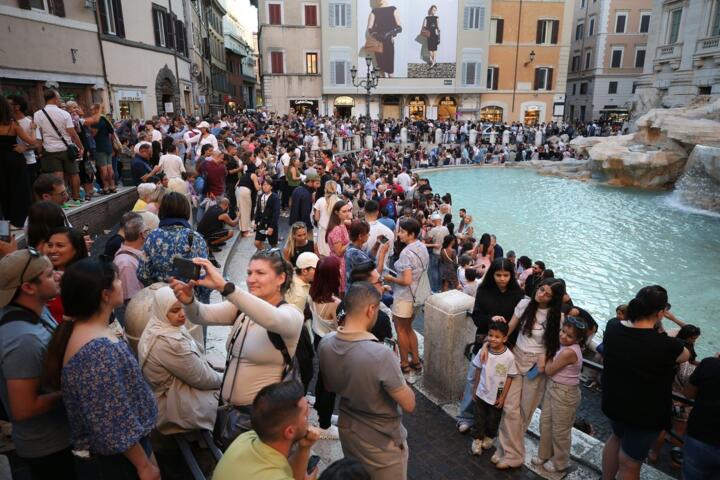
Avoid Crowds At Top Sites
Europe’s most visited attractions share a pattern: demand concentrates around a few time windows, and entry rules turn that demand into visible queues. A “crowd” is not only the number of people; it is also how long they must wait to pass security, buy tickets, or enter galleries. If you plan around those bottlenecks, you can reduce time in line and spend more time inside.
Start with the site’s operating model. Many landmarks run timed entry for specific areas, while others use general admission with first-come queues. Museums often stagger entry by ticket type, and historic sites may restrict access to certain routes. Even when two attractions are a few streets apart, their crowd behavior can differ because of security screening, elevator capacity, and the width of the main circulation path.
Practical examples: the Louvre in Paris uses timed tickets for many visitors, and the Vatican Museums in Rome commonly require pre-booking for entry. In Barcelona, Park Güell uses timed entry and limits capacity per time slot. These policies change the crowd shape from “arrive anytime and wait” to “arrive within a window and move faster once inside.”
For travelers who want a calmer visit, the goal is to match your schedule to the site’s capacity constraints. That means choosing arrival times that align with lower demand, using official ticketing channels, and planning a route that avoids the most congested rooms or viewpoints.
Main Problems And Pain Points
People often assume that arriving earlier always reduces crowding, but the bottleneck may shift. If a site opens with a single security line, arriving too early can still mean a long wait before screening begins. If the site uses timed entry, arriving far before your slot can also waste time because staff may not admit you until the window starts.
Another common mistake is treating “peak season” as the only driver. Crowd levels also rise on specific days: school holidays, public holidays, and weekends. In some cities, cruise ship schedules add a predictable surge to nearby attractions, especially those within walking distance of major ports. The crowding you feel at a landmark can be the result of visitor flows from transit hubs, not just the landmark itself.
Supporting technologies and dependencies matter. Timed ticketing depends on ticketing systems and gate scanning; if you buy through an unofficial reseller, you may face delays at validation or risk ticket invalidation. Crowd estimates depend on real-time data feeds that many sites do not publish, so third-party “live crowd” apps can be inconsistent. Even official apps can lag behind actual conditions because they reflect capacity targets rather than the exact queue length at the moment you arrive.
Finally, travelers underestimate how quickly crowding builds inside. A site can feel manageable at the entrance and then become dense in a few rooms, staircases, or viewpoints. If your plan is “see everything in order,” you may hit the same popular sequence as everyone else, which creates a temporary bottleneck even outside peak hours.
Solutions And Advice
Use Timed Tickets Correctly
When a site offers timed entry, treat the time slot as a capacity control. Buy tickets from the official ticketing page or the site’s authorized partners, then plan to arrive within the window stated on your ticket. For example, Park Güell’s timed entry system assigns a specific slot; arriving hours early usually does not speed up entry because the site controls access by slot.
Check the ticket rules for “late arrival” policies. Some venues admit you only if you enter within a grace period; others may require you to rebook. If your itinerary includes multiple timed attractions, leave buffer time for transit and security screening, because a missed slot can cascade into missed entry times.
Side observation: I have seen travelers arrive at 09:00 for a 09:30 slot and spend 35 minutes waiting at the gate because the scanning system only opens for the assigned window. The ticket still worked, but the schedule did not.
Pick Arrival Windows With Logic
For general admission sites without timed entry, choose arrival times that reduce the chance of overlapping tour groups. Early mornings often work, but the best window depends on when security screening begins and when the first wave of guided groups arrives. Midweek mornings can be quieter than weekends, yet some attractions still see strong demand on Mondays due to “start-of-week” travel patterns.
Use opening hours plus your travel time to estimate when you will reach the entrance. If the site opens at 08:30 and security starts at 08:00, arriving at 07:45 may not help if you cannot enter the screening area. If the site opens at 10:00, arriving at 09:00 may still mean you wait outside until staff begin processing.
For museums, consider visiting popular galleries earlier in your visit and leaving less crowded sections for later. This approach reduces the chance that you reach the most famous room at the same time as the largest tour groups.
Route Around Bottleneck Rooms
Inside large museums and historic complexes, crowding concentrates in a few choke points: ticket halls, central staircases, narrow corridors, and the most photographed exhibits. Plan a route that avoids those choke points during the busiest hours. If you can, start with a less famous wing first, then return to the headline rooms after the initial rush.
Look for floor maps and “visitor flow” hints on the venue website. Some sites publish recommended routes for timed entry visitors, and those routes often reflect how staff manage capacity. If the venue does not publish routes, you can still plan by identifying which rooms are typically “must-see” and which are “nice-to-see,” then swapping the order.
Side observation: on a large gallery visit, the crowd density often spikes around the first major landmark painting or sculpture, then eases as people spread out. If you reach that room 30–45 minutes later than the first wave, the difference can be noticeable even when the entrance line is similar.
Use Real Tools, Not Vibes
Rely on sources that connect to operations: official ticketing pages, venue opening hours, and published entry policies. For queue expectations, some venues provide “busy times” indicators, but not all do. When you use third-party crowd estimates, treat them as rough signals rather than guarantees, because they may be based on historical patterns or incomplete data.
Check whether the site requires ID, timed tickets, or specific entry gates. Security rules can change by season, and some venues restrict bags or require screening that slows entry. If you travel with a large backpack, confirm the size limits before you arrive; bag policies can add friction even when the crowd level is moderate.
Tool detail: Google Maps can show typical transit times and walking routes, but it does not predict queue length. Use it for getting to the entrance on time, then base your crowd expectations on ticket rules and day-of-week patterns.
Case Examples
Rome: Vatican Museums With Slot Entry
An anonymized traveler booked a timed entry slot for the Vatican Museums on a weekday morning. They arrived 20 minutes before the slot, went through security, and entered close to the start of the window. The entrance line was still visible, but the timed system prevented the “arrive and wait for hours” scenario.
Inside, the traveler avoided the most crowded corridor by following a reverse order for a few rooms, then returned to the headline galleries later. They did not try to see every exhibit, which reduced time spent in dense areas. The visit stayed calmer because their plan matched the venue’s capacity rhythm rather than their own “must-see first” list.
Barcelona: Park Güell Capacity Management
An anonymized couple planned a morning visit to Park Güell using timed tickets. They chose a slot that started after the first wave of coach tours typically arrives, based on their hotel’s neighborhood foot traffic and the day-of-week pattern. The entrance process moved steadily because the venue controls entry by time slot.
They still encountered crowds at the main terrace viewpoint, but the congestion lasted for a shorter period because they arrived after the initial group flow. They spent longer in the quieter paths and viewpoints and treated the headline terrace as a short stop rather than a long linger.
Comparison Checklist
| Planning Choice | What It Changes | Typical Outcome | Limitations |
|---|---|---|---|
| Timed entry | Controls gate throughput by slot | Shorter “wait to enter” time | Late arrival can still cause denial or rebooking |
| Early arrival | Reduces overlap with tour groups | Fewer people in the first choke points | May not help if security starts later |
| Reverse room order | Shifts you away from peak interior bottlenecks | Less time stuck in dense galleries | Requires flexibility; maps may not match crowd flow |
| Official sources only | Reduces policy surprises | Fewer entry failures and delays | Official pages may not show real-time queue length |
Common Mistakes
Buying tickets from unofficial sellers without checking validation rules is a frequent problem. Even when a ticket looks legitimate, some venues require QR codes that only work through authorized channels. If you arrive and the ticket fails scanning, you lose time and may miss your planned entry.
Another mistake is packing a schedule that assumes “one attraction per time slot.” Transit delays, security screening, and restroom breaks add friction. If you schedule a timed entry immediately after a long walk from a different neighborhood, you risk arriving late even when you left early.
People also over-plan the “perfect route” and then get stuck when crowd patterns shift. A route that avoids one bottleneck can still collide with another, like a temporary exhibit crowd or a school group entering a gallery. Build in a fallback plan: identify two or three alternative rooms or viewpoints you can switch to without breaking your visit.
Finally, travelers sometimes ignore bag and ID rules. A small mismatch, like a bag that exceeds the size limit, can trigger extra screening or a forced check-in line. That friction can erase the crowd advantage you gained by arriving early.
FAQ
Do Timed Tickets Always Reduce Queues?
Timed tickets usually reduce the “waiting to enter” phase, but they do not remove interior crowding. Expect dense areas around the most photographed rooms, especially if many visitors share the same route.
What Arrival Time Works Best For General Admission?
Choose a time that matches when security screening begins and when tour groups typically arrive. Midweek mornings often help, but the best window depends on the site’s opening process and local school or holiday schedules.
Can I Skip Lines By Visiting Nearby Attractions Instead?
Yes, but only if the nearby attractions have different crowd drivers. If both sites depend on the same tour groups or transit hub, you may still face similar congestion.
Are Crowd Apps Reliable For Europe’s Major Sites?
They can be useful as rough indicators, yet they often lack real-time queue accuracy. Prefer official venue information for entry rules, then treat app data as a secondary signal.
What Should I Check Before Buying Tickets?
Confirm the official ticket source, the time slot rules, late-arrival policy, ID or reservation requirements, and bag restrictions. These details affect whether you gain time or lose it at the gate.
Author's Insight
Crowd avoidance works best when you plan around capacity controls: timed entry, security throughput, and interior bottlenecks. Many venues publish rules that explain how they manage visitor flow, and those rules often matter more than general advice about “go early.” Real-time crowd tools can help with timing, but they rarely replace official policies and day-of-week planning.
When you plan, separate “time to enter” from “time inside.” A visit can have a short entrance wait and still feel crowded in a few rooms, so routing decisions and visit length shape your experience.
If you want a practical starting point, pick one headline site and one supporting site on the same day, then build buffer time for transit and screening. On my own planning checks (I used Google Maps version timestamps in 2026-09), I found that the buffer matters more than the exact minute of arrival.
Key Takeaways
- Timed entry reduces gate waiting, but interior congestion still depends on room bottlenecks.
- Choose arrival windows using opening and security processes, not only “early” as a concept.
- Route around dense rooms by changing the order of highlights, then keep a fallback plan.
- Use official ticketing and venue rules to avoid validation and bag-policy surprises.