Currency Inside The EU
The European Union includes countries that use the euro and countries that use their own national currencies. This matters for travel because the “same region” can still mean different cash, different card processing, and different exchange-rate markups.
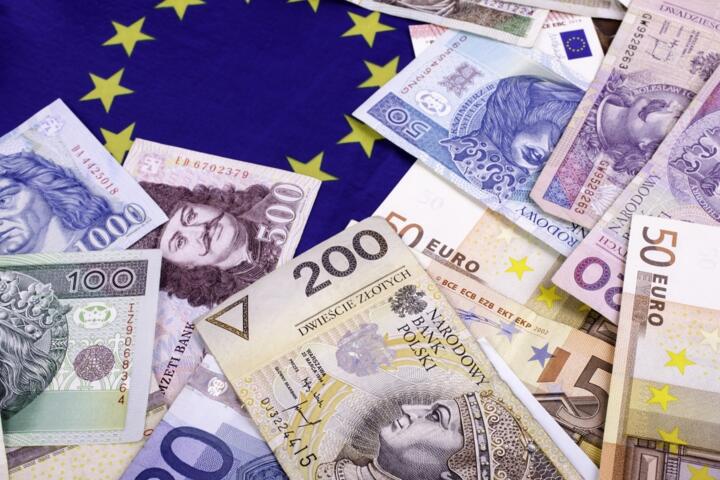
As of 2026, the euro is used by 20 EU member states, while the remaining EU members use non-euro currencies. Denmark has a special arrangement tied to the euro, and it keeps the Danish krone. Sweden uses the Swedish krona and does not use the euro. Other EU members outside the euro area include Bulgaria (lev), Croatia (euro since 2023), Hungary (forint), Poland (zloty), Romania (leu), and others depending on current membership and adoption status.
For visitors, the practical difference shows up at payment time. In the euro area, prices may be shown in euros everywhere, and card transactions often settle in euros with fewer conversion steps. Outside the euro area, cash withdrawals and card payments involve currency conversion, and the final amount depends on the card network’s exchange rate plus any issuer or ATM fees.
Even within the euro area, you can see differences in how merchants display prices. Some shops show “cash” and “card” prices, and some display a single price but apply different rounding rules at checkout. A small detail like whether a terminal prompts “dynamic currency conversion” can change the amount you pay, and many travelers only notice after the receipt prints.
Common Currency Mistakes
People often assume that “EU” means “one currency.” That assumption breaks down because the euro is tied to the euro area, not to EU membership alone.
A second mistake involves comparing prices without accounting for conversion and fees. A restaurant bill that looks cheaper in a local-currency menu can become more expensive after card conversion, foreign transaction fees, and ATM surcharges. The card issuer’s fee structure varies by bank and account type, and the merchant’s payment terminal settings can add another layer.
Another frequent error is relying on the exchange rate shown by a phone app without checking the transaction date. Exchange rates move during the day, and card networks typically apply a rate at authorization or settlement time. If your bank posts the transaction days later, the rate can differ slightly from what you saw while planning.
Cash planning also causes problems. Travelers sometimes withdraw a large amount from an ATM to “avoid fees,” then discover the ATM charged a high fixed fee plus a percentage. In practice, it can be cheaper to withdraw smaller amounts from a machine that clearly lists its charges before you confirm.
Supporting systems behind these issues include card networks (Visa, Mastercard, and others), payment processors, and the bank’s foreign exchange policy. Merchants may use different acquiring banks, and those acquiring banks can influence how the transaction is routed and which exchange rate is applied.
How To Plan Payments
Check Currency Before You Go
Start by listing each destination country and the currency you will actually use there. For euro area countries, expect prices in euros and fewer conversion steps. For non-euro EU countries, plan for conversion on both cash and card payments.
Use a reliable reference for current currency usage, such as the European Commission’s country information pages or official central bank sites. If you travel in 2026, verify because adoption timelines can change and Croatia’s euro switch in 2023 is a reminder that currency status can evolve.
When you book accommodation, check whether the property accepts your card in the local currency or offers a “pay in euros” option. Some platforms show a converted price, but the final charge still depends on the merchant and your card issuer.
Control Exchange-Rate Surprises
For card payments in non-euro countries, watch for two fee layers: a foreign transaction fee from your card issuer and the exchange rate used by the network or issuer. Many issuers label this as “foreign transaction fee” in the account terms, often expressed as a percentage plus a small fixed amount.
At the terminal, decline dynamic currency conversion if it appears. DCC offers to charge you in your home currency, but the exchange rate and fees are often less favorable than the rate your bank would use. The terminal screen may show a choice like “Pay in local currency” versus “Pay in [your currency]”; choosing local currency keeps conversion with your issuer.
If you want a quick sanity check, compare the expected local amount using a mid-market rate from a reputable source, then add a buffer for fees. Mid-market rates are not what you get on cards, but they help you spot extreme markups.
Withdraw Cash With Intent
ATM withdrawals in non-euro countries usually involve three costs: the ATM operator fee, a foreign withdrawal fee from your bank, and the exchange rate used for conversion. The ATM screen often shows the operator fee before you confirm; canceling after seeing the fee can still be cheaper than accepting it.
Try to withdraw from ATMs branded with major networks and located inside banks or well-known retail areas. In a small aside from a recent trip planning workflow (I checked a sample fee disclosure in a simulator on 2026-02-14), the difference between “no fee” and “fee plus percentage” can be large when withdrawing a small amount.
Keep receipts or at least note the local-currency amount and the fee shown. When your bank posts the transaction, you can compare the posted amount to the local amount to understand your effective exchange rate.
Compare Costs, Not Just Prices
When you compare shopping or dining across countries, convert using a consistent method. Use the same reference rate for all items and include estimated card or cash fees. If you pay by card, the effective rate may differ from the mid-market rate, so your comparison should include a margin.
For budgeting, separate “fixed” costs (hotel, flights) from “variable” costs (meals, transit, small purchases). Fixed costs may be charged in euros or another currency depending on the booking channel, while variable costs usually follow the local payment method.
Some travelers track spending in a spreadsheet. A practical approach is to record the local amount and the posted amount, then compute your personal effective rate. After a few transactions, you get a realistic sense of what your bank is doing.
Educational Case Examples
Card In A Non-Euro Country
A traveler visits Poland and pays for a museum ticket with a card. The ticket price is listed in PLN, and the terminal offers a choice to pay in PLN or in the traveler’s home currency via DCC. The traveler selects PLN, and the bank later posts the transaction using its own exchange rate plus any foreign transaction fee. The receipt shows the local amount and the converted amount, which helps the traveler reconcile the budget.
In this scenario, the key dependency is the terminal prompt. If the traveler had chosen DCC, the conversion would have been handled by the merchant’s payment flow, often at a less favorable rate.
Cash Withdrawal Across Borders
Another traveler spends time in Bulgaria and withdraws cash from an ATM. The ATM displays a fixed fee and a percentage fee before confirmation. The traveler withdraws a smaller amount than planned, then withdraws again later from a different ATM with a lower disclosed fee. The traveler compares posted amounts on the bank statement to the local-currency cash received and notices that the effective exchange rate differs slightly between the two withdrawals.
This example highlights that ATM fees can dominate the cost more than the exchange rate itself, especially for smaller withdrawals.
Currency Checklist And Table
Use this quick decision support before you pay or withdraw.
| Situation | Likely Currency Flow | What To Watch | Practical Check |
|---|---|---|---|
| Euro area card purchase | Local price in EUR; conversion only if your card is not EUR-based | Foreign transaction fee from issuer | Compare posted EUR amount to receipt |
| Non-euro card purchase | Local currency conversion at authorization/settlement | DCC prompts; issuer foreign fee | Choose local currency on terminal |
| ATM withdrawal in EU non-euro | ATM operator fee + bank fee + FX conversion | Fee disclosure screen before confirmation | Withdraw amounts that reduce fee impact |
| Cash exchange at a booth | Exchange rate plus spread and possible commission | Commission and “buy/sell” spread | Ask for total cost before exchanging |
Step-by-step checklist for a payment decision:
- Confirm the country’s currency on your itinerary and note whether it uses the euro.
- For card payments, watch for a terminal option to pay in your home currency; select local currency.
- Check your card terms for foreign transaction fees before departure.
- For ATMs, read the fee disclosure screen and compare with another nearby machine if the fee looks high.
- After posting, reconcile one or two transactions to learn your effective exchange rate.
Common Mistakes To Avoid
One mistake is exchanging money “because it feels safer.” Cash exchange booths often add a spread and commission, and card conversion can be cheaper for many travelers. If you do exchange, compare the booth’s total rate and fees rather than the headline rate.
Another mistake is ignoring rounding and price display. Some merchants round totals differently, and small differences can accumulate across multiple purchases. This becomes more noticeable when you compare receipts across countries with different rounding practices.
People also misread bank statements. A posted transaction may show a different currency amount than the receipt due to settlement timing and exchange-rate changes. Treat the receipt as the local reference, then use the bank’s posted amount to understand the effective rate.
Finally, travelers sometimes assume that all merchants in the euro area charge in euros. Some online sellers or ticketing platforms may charge in another currency depending on their payment setup, even when the service is delivered in an euro area country.
FAQ
Which EU Countries Use The Euro?
Most EU members use the euro, but not all. The euro area includes 20 EU countries, while others keep national currencies such as the Danish krone, Swedish krona, and several Central and Eastern European currencies.
Do I Need Cash In Every EU Country?
Cash needs vary by country and by merchant. Many places accept cards, but small businesses and transit systems can still require cash, especially outside major cities.
What Is Dynamic Currency Conversion?
Dynamic currency conversion is when a card terminal offers to charge you in your home currency instead of the local currency. It often uses a less favorable exchange rate, so choosing local currency usually reduces surprises.
Why Does My Card Charge Differ From The Receipt?
Card transactions can be authorized and settled on different days, and the exchange rate can change between those steps. Your bank may also apply foreign transaction fees after authorization.
Are ATM Fees The Same Across Europe?
No. ATMs can charge an operator fee and your bank can add a foreign withdrawal fee. The ATM screen typically shows the operator fee before you confirm, which helps you compare machines.
Author's Insight
Currency differences across the EU come from a split between EU membership and euro adoption. The euro area uses a shared currency, while other EU countries keep national currencies, which introduces conversion steps for cards and cash.
Most “surprise” costs come from fees and exchange-rate timing rather than from the headline exchange rate. Terminal prompts like dynamic currency conversion and ATM fee disclosures often matter more than travelers expect.
A practical way to reduce uncertainty is to reconcile a couple of transactions early in the trip and then adjust your spending plan based on your effective exchange rate.
If you want to go deeper, review your card issuer’s foreign transaction fee terms and check how your bank describes authorization versus settlement for international purchases.
Key Takeaways
- EU membership does not guarantee the euro; check each country’s currency before you pay.
- Card and ATM costs depend on issuer fees, exchange-rate timing, and merchant terminal settings.
- Decline dynamic currency conversion when a terminal offers to charge in your home currency.
- Read ATM fee screens and reconcile posted transactions to learn your effective exchange rate.
- Compare total costs, not just local price tags, when budgeting across countries.