The Privacy Paradigm
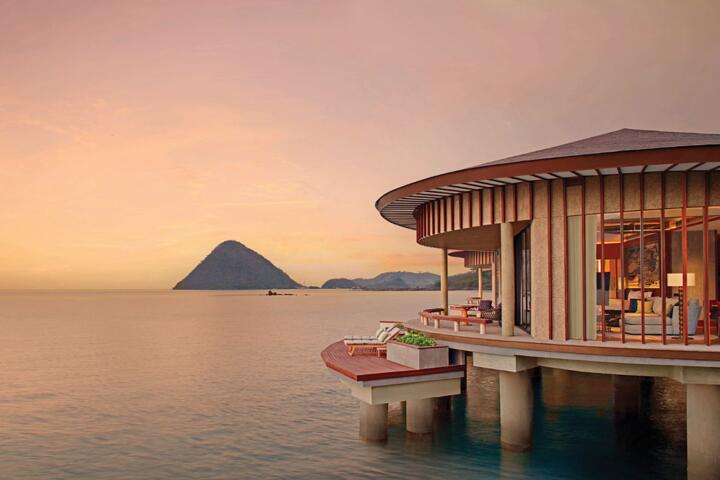
In the context of Asian luxury, privacy has transitioned from a "do not disturb" sign to a total architectural philosophy. It is the art of invisible logistics where guests never encounter a neighbor or a service trolley. Modern travelers are paying for the absence of others, seeking environments where the density of staff-to-guest ratios exceeds 3:1, yet interactions remain strictly intentional.f
Consider the data: according to recent luxury travel trends, 78% of travelers in the $250k+ annual spend bracket prioritize "exclusive-use" or "zero-visibility" layouts over traditional brand prestige. In regions like the Maldives or the Bhutanese highlands, this has led to the rise of "fortress villas"—villas that are strategically angled to ensure zero line-of-sight from any other structure or boat path.
A practical example is the Amankora circuit in Bhutan. Instead of one massive hotel, the experience is split into five small lodges across different valleys. This decentralization ensures that even at full capacity, a guest feels like the only soul in the Himalayas. It is not just about a room; it is about owning the horizon.
The Failure of Luxury
The most common mistake in high-end hospitality is "performative service." This is when staff are overly visible in an attempt to show value, which inadvertently destroys the guest's sense of solitude. When a butler knocks every hour to offer fruit or turn down beds, they are effectively intruding on the mental space the guest paid thousands of dollars to clear.
Another pain point is "Digital Leakage." Many resorts claim privacy but fail to secure their perimeters against drone photography or telephoto lenses from public waters. For high-profile figures, a single leaked photo from a "private" pool can result in security risks or stock market fluctuations. True privacy requires a 360-degree topographical shield and strict "no-drone" enforcement.
Failure to implement these measures leads to "anxious relaxation." The guest remains on guard, unable to fully disconnect because they are aware of the potential for being observed. In the age of social media, the lack of a "no-photo" policy in common areas—or even the existence of common areas—is a major deterrent for the truly elite.
Seclusion Strategies
Invisible Service Logistics
Top-tier resorts like Soneva Jani in the Maldives utilize "service tunnels" or hidden pathways. Staff move beneath or behind the guest’s line of sight. This allows for seamless room servicing and food delivery without a single encounter. On a practical level, this requires a 40% increase in initial construction costs but results in a 100% "ghost-staff" experience.
Topographical Isolation
The use of natural barriers is the most effective way to guarantee privacy. Properties like Amanpulo on Pamalican Island in the Philippines own the entire island. Because the land is privately held, there are no public beaches. This eliminates the "public access" loophole found in many French or Thai laws, ensuring the sand is as private as the bedroom.
Digital and Signal Masking
For the security-conscious, resorts now offer "Signal Silencing." This involves Faraday-style architectural elements or high-end encryption for the resort’s local Wi-Fi. Resorts like Nihi Sumba in Indonesia emphasize the "edge of wildness," where the lack of cellular towers is marketed as a feature, not a bug, allowing for total digital detoxification.
The Concept of the "Villa-Only" Resort
Moving away from the "Main Building" model is essential. Resorts that eliminate a central lobby or communal dining room force a private-first experience. Every activity, from spa treatments to 12-course degustation menus, is moved to the guest’s private quarters. This requires a logistical backend capable of replicating a full kitchen and spa within a single villa unit.
Acoustic Engineering in Nature
True privacy is also auditory. High-end resorts now employ acoustic consultants to ensure that the sound of a neighbor's splash or conversation is dampened by thick tropical foliage or strategic water features. Using "white noise" from natural waterfalls or sea-breezes, engineered through landscaping, masks human sounds and preserves the illusion of being alone.
Excellence in Execution
Case Study 1: The Private Island Fortress
A high-profile CEO required a 14-day retreat without any media exposure. They chose Laucala Island. The resort utilizes a private landing strip and customs clearance on-site. By controlling the point of entry and having a 1:5 staff ratio, the resort managed to host the guest and their family with zero external sightings. Result: The guest renewed their stay for an additional week, spending over $350,000 in total.
Case Study 2: The Vertical Sanctuary
In the dense environment of Bali, Mandapa, a Ritz-Carlton Reserve, utilized the verticality of the Ayung River valley. By terracing villas into the cliffside, they ensured that the roof of one villa is the floor of the forest for the one above. No villa can see into another. This architectural feat maintained 95% occupancy during peak seasons while keeping guest interactions at near zero.
Privacy Framework
| Feature | Standard Luxury | Ultra-Privacy Tier | Primary Benefit |
|---|---|---|---|
| Staff Interaction | Frequent/Attentive | On-demand/Invisible | Mental freedom |
| Beach Access | Public/Shared | Private/Deeded | Security/Exclusivity |
| Arrival | Lobby Check-in | In-Villa/Direct | Zero public exposure |
| Dining | Restaurant-focused | 100% In-Villa option | Total Seclusion |
| Drones/Media | Complimentary use | Strict No-Fly Zones | Image protection |
Avoiding Common Errors
One major error is choosing a resort based on "Instagrammability." Highly photographed resorts often attract "content seekers" who may inadvertently (or intentionally) photograph other guests. To avoid this, look for resorts with strict "social media policies" in common areas or those that forbid photography outside of one’s own villa.
Another mistake is ignoring the "service entrance" location. When booking, ask for a site map. If your villa is located near the main staff hub or the laundry facility, you will hear the hum of golf carts all day. The best villas are at the "end of the line," where the only traffic is the person bringing your dinner.
FAQ
Which Asian country offers the best private islands?
The Philippines and Indonesia offer the most truly "private" islands where the resort owns the entire landmass, unlike Thailand or Vietnam where beaches are often legally public.
How do resorts prevent drone intrusions?
The best resorts use a combination of legal "No Fly Zone" designations and, in extreme cases, radio-frequency monitoring to alert security if a drone is launched nearby.
Is "In-Villa Dining" as good as the restaurant?
In ultra-luxury properties like Cheval Blanc Randheli, the culinary team is designed for "Mobile Fine Dining," ensuring that food quality at your villa table is identical to the kitchen pass.
What is the most private way to arrive at a resort?
Look for resorts that offer "VIP Fast Track" services at the airport, bypassing main terminals, followed by a private helicopter or yacht transfer directly to the villa's private jetty.
Are these resorts suitable for high-profile children?
Yes, many resorts now offer "Private In-Villa Nannies" and secure play areas that are not visible from any public or shared pathways, ensuring the safety of the entire family.
Author’s Insight
In my years evaluating luxury properties across Southeast Asia, I have found that the most expensive resorts aren't always the most private. I once stayed at a $3,000-a-night suite where I could hear the neighbor's TV. True privacy is a technical achievement involving decibel-testing, line-of-sight mapping, and a staff trained in the "art of being invisible." My advice: always ask the concierge about the "buffer zone" between villas before you wire the deposit. If they can't give you a measurement in meters, it's not a privacy-first resort.
Summary
Redefining privacy in Asia requires moving beyond traditional hospitality into the realm of architectural and logistical isolation. For the traveler who values being "unfindable," the choice of a resort must be based on topographical security, invisible service models, and a "villa-centric" lifestyle. Focus on properties that offer deeded private land and strict anti-paparazzi protocols to ensure your sanctuary remains truly yours. Practical step: Verify the resort’s drone policy and staff-to-guest visibility ratio before booking your next escape.