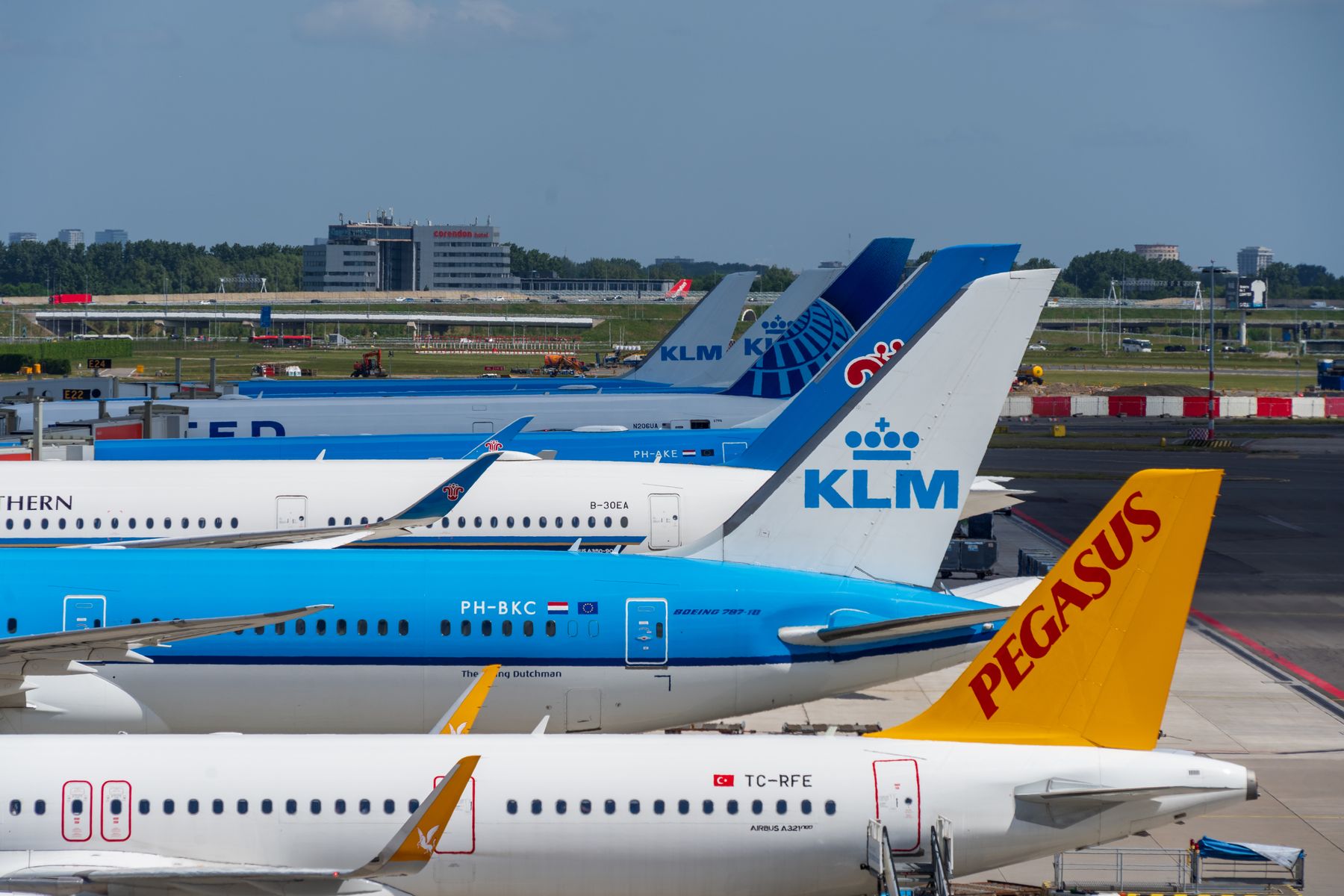
Airport Slots And Peak Fares
Airport slots are scheduled landing and departure time rights that airlines must hold to use constrained airport capacity. In Europe, many major airports operate under slot coordination rules because runways, taxiways, gates, and air traffic flow cannot expand quickly enough for demand. When peak-season demand rises, slot scarcity tightens the number of flights that can operate at specific times, which limits seat supply even if aircraft and crews exist.
Peak Europe fare surges often track the interaction between slot limits and airline schedule design. Airlines can add frequencies on routes where they already have usable slots, but they cannot freely “create” extra departures at a busy airport without slot availability. That constraint pushes airlines to protect revenue by selling fewer seats at lower prices, especially for departures that are easiest to reach from business and leisure travel patterns.
For a practical example, consider a traveler trying to fly from a slot-constrained hub to a popular holiday destination during late July. Even if the airline has spare aircraft, it may be unable to schedule additional morning departures from that hub because the airport’s peak-hour slots are already allocated. The result is fewer seats on the exact departure times people prefer, and prices rise for the remaining inventory.
How Slots Create Price Pressure
Slot scarcity affects pricing through inventory and timing. If an airport can only support a fixed number of departures in a peak window, airlines must distribute limited seats across fare classes. They often reserve lower-priced seats for demand that arrives early or for customers with flexible timing, while holding back inventory for later buyers who are less price-sensitive.
Airlines also compete on schedule convenience, not just route distance. A departure time that aligns with business travel or cruise connections can attract a higher willingness to pay. When slot availability restricts the number of flights at those times, the remaining flights become “schedule scarce,” which tends to raise the minimum price for travelers who need that exact timing.
Seasonal schedule changes can amplify the effect. In Europe, the IATA scheduling season structure and the slot coordination calendar mean airlines often finalize peak schedules well in advance. If demand grows after schedules are set, airlines cannot always add flights quickly, so they adjust pricing rather than capacity.
What To Do When Peak Prices Jump
Check Timing Flexibility First
Start by comparing nearby departure times rather than only the exact flight you want. If you can shift by one or two hours, you may find flights that use different slot banks or less constrained windows. This approach works best when the airport is coordinated and peak-hour slots are the bottleneck, which is common at major hubs.
Use filters for “earliest” and “latest” departures and note the price difference across windows. If the cheapest options cluster at off-peak times, the pattern often reflects slot scarcity rather than random fare noise. A small aside: in my own planning spreadsheets (I tend to label them “v3.2” when I update them), I mark departures by time window because the fare spread usually tracks the window more than the day-of-week.
Look For Schedule Additions Signals
Monitor whether an airline adds frequencies or changes aircraft types on your route. If you see new flights appearing in the timetable, it can indicate that the airline secured additional usable slots or improved operational capacity. If the schedule stays fixed while prices rise, it often suggests capacity is already maxed out for the relevant peak window.
Practical tools include airline “manage booking” views, timetable pages, and fare alerts from major aggregators. Avoid relying on a single site’s history; prices vary by distribution channel. A mild frustration: many fare alerts trigger after the price moves, not when the schedule changes, so you still need to check the timetable.
Use Multi-Airport Options Carefully
When you can, compare alternative airports within a reasonable ground-transfer distance. Slot constraints can differ sharply between airports, even in the same metro area. For example, one airport may be heavily coordinated while another has more runway or gate flexibility during the same weeks.
Calculate total travel time including transfers and buffer for traffic. If the alternative airport requires a long drive or train connection, the time cost can outweigh fare savings, especially for same-day round trips. A small detail that matters: some rail connections to airports run less frequently on weekends, and that can turn a “cheap flight” into a tight schedule.
Book Early, But Track Inventory
Booking earlier can reduce exposure to peak pricing because airlines typically release lower fare buckets first. The slot mechanism means those buckets may be limited for peak departure times, so the low-price inventory can sell out quickly. If you wait, you may still find seats, but the remaining inventory often sits in higher fare classes.
Use a price watch for at least two weeks before your target departure. If prices rise steadily while the flight remains available, it can indicate that lower fare buckets are gone. If prices drop while availability increases, it can indicate more capacity or more competitive pricing from other channels.
Examples From Realistic Scenarios
Hub To Holiday Destination In Late July
A traveler plans a round trip from a large coordinated European hub to a popular beach destination for late July. The exact morning departure is consistently priced higher than nearby afternoon departures. When the traveler checks alternative departure times, the cheapest options shift to later slots, suggesting the airport’s peak-hour window is the constraint rather than route distance.
The traveler also notices that the airline’s timetable does not add extra flights during the final month, even as prices rise. That pattern fits a schedule that is already fixed for the season, with pricing adjusting to demand rather than capacity expanding.
Business Route With Fixed Morning Banks
A business traveler needs a morning arrival into a major city for meetings and checks flights for a mid-week date in August. The morning bank shows limited availability and higher prices across multiple booking channels. The traveler tries shifting the outbound departure by one day and finds lower fares, even though the route and aircraft type remain similar.
In this scenario, the fare difference aligns with demand patterns and the limited number of usable slots in the morning window. The traveler avoids assuming a “random discount,” and instead treats the schedule window as the driver.
Peak Slot Pricing Checklist
| Decision Point | What To Check | What It Suggests | Action |
|---|---|---|---|
| Departure time window | Compare prices across ±2 hours | Off-peak cheaper often means slot scarcity in peak hours | Shift time window if your plans permit |
| Schedule stability | Look for new flights or frequency changes | No changes while prices rise suggests capacity is fixed | Use alternative times or airports |
| Availability pattern | Track seat availability over 1–3 weeks | Fewer low-fare buckets can drive steady price increases | Book when the price matches your risk tolerance |
| Airport alternatives | Compare nearby airports and ground transfer time | Different coordination levels can change fare behavior | Include transfer time in the decision |
Common Mistakes
One mistake is treating a fare drop on one day as evidence that prices will fall for your exact departure time. Slot scarcity is time-specific, so the same route can price differently across departure windows. Another mistake is assuming that “more seats left” always means a discount is coming; airlines can keep higher fare buckets available while selling out lower ones.
Travelers also over-focus on the route distance and under-focus on airport constraints. A short hop between two coordinated airports can cost more than a longer route that uses less constrained capacity. People sometimes ignore gate and turnaround constraints too, then wonder why an airline cannot add an extra flight even when aircraft appear available.
Finally, avoid promotional interpretations from fare trackers that claim to predict future prices. Fare movements depend on inventory management, distribution agreements, and demand signals that vary by channel. A careful approach uses patterns and schedule changes, not predictions.
FAQ
What Is A Slot In Airport Operations?
A slot is a permission for an airline to use a specific airport time for landing or departure. At coordinated airports, airlines need slots to operate during constrained periods.
Do Slots Affect Only Major Airports?
Slots matter most at airports that operate under coordination because runway, taxiway, or gate capacity limits peak demand. Many smaller airports do not use the same slot coordination framework.
Why Do Prices Rise Even When Flights Still Exist?
Slot limits can cap the number of flights in peak windows, so airlines sell limited seats across fare classes. When lower-priced inventory sells out, remaining seats price higher even if the flight still runs.
Can Airlines Add Flights During Peak Season?
They can sometimes add frequencies if they have usable slots and operational capacity. When peak-hour slots are already allocated, schedule additions may be delayed until the next coordination season.
How Can I Tell If Slot Scarcity Drives My Fare?
Compare prices across departure time windows and check whether the timetable changes. If off-peak times are cheaper and the schedule stays stable while prices rise, slot-related capacity constraints often explain the pattern.
Author's Insight
Airport slot rules connect airport capacity limits to airline schedule design, and schedule design drives seat inventory timing. When peak demand rises faster than usable slot capacity, airlines adjust pricing because they cannot always add flights quickly. The most reliable consumer signals come from time-window price patterns and whether frequencies change on the timetable.
Slot coordination frameworks and air traffic flow constraints can also reduce effective capacity even when slots exist, which helps explain why fare spikes can feel sudden. For planning, treat peak pricing as a capacity-and-inventory problem rather than a single-factor story.
Key Takeaways
- Peak Europe fare surges often reflect limited airport capacity in specific time windows, not only fuel or general demand.
- Slots restrict how many flights can operate at busy airports, so airlines adjust pricing when low-fare inventory sells out.
- Compare prices across departure windows and watch for timetable changes; stable schedules with rising prices often indicate fixed capacity.
- Use nearby airports and flexible travel dates when possible, but price the full trip time, not only the ticket.