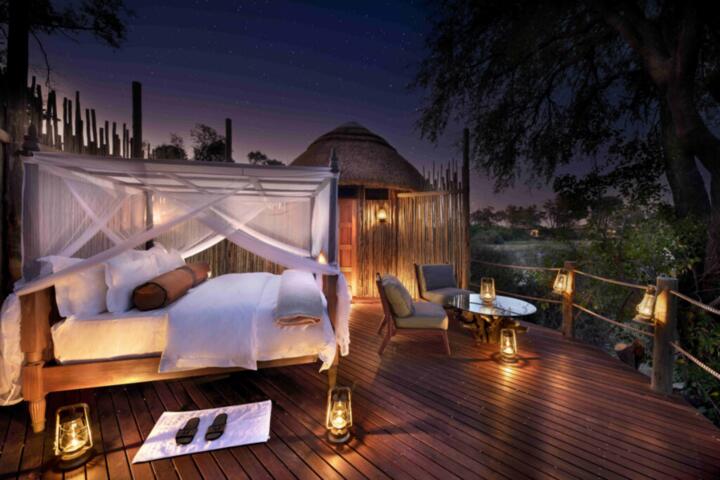
Astro-Tourism Evolution
Botswana has transitioned from simple campfire storytelling to sophisticated astral tourism, driven by the unique atmospheric conditions of the Makgadikgadi Pans and the Okavango Delta. Unlike many global destinations where "stargazing" is a casual activity, Botswana’s luxury lodges are increasingly investing in research-grade hardware and on-site astronomers. This shift caters to "Bortle 1" seekers—those looking for the darkest skies achievable on Earth.
In the Makgadikgadi region, the salt pans provide a 360-degree horizon with zero topographic obstruction, creating a "perfect dome" effect. According to the International Dark-Sky Association, central Botswana remains one of the few places where the Milky Way can cast a visible shadow on the ground. For travelers, this means seeing deep-sky objects like the Carina Nebula or the Magellanic Clouds with the naked eye, a feat impossible in 90% of the Northern Hemisphere.
Practically, this means lodges like Jack’s Camp or Xigera Safari Lodge are no longer just offering a telescope on a deck; they are curating educational experiences. They utilize automated celestial tracking and high-aperture optics to bridge the gap between a luxury vacation and a scientific expedition. The dry winter months (May to September) offer nearly 100% clear night yields, making it a statistically superior choice for astronomical photography.
Luxury Stargazing Flaws
A primary failure in luxury astro-tourism is the "decoration telescope" syndrome, where high-end lodges install expensive equipment but lack the staff to calibrate or operate it. Guests often encounter misaligned mirrors or "drift" in the tracking motors, resulting in blurry views. Without a trained guide, a $15,000 Celestron telescope becomes nothing more than a static prop, leading to guest frustration and missed opportunities.
Furthermore, many travelers underestimate the "Light Leakage" issue. Traditional luxury lodge designs often feature bright outdoor ambient lighting for aesthetics, which destroys a human's night vision (scotopic vision). It takes approximately 20 to 30 minutes for the human eye to fully adapt to the dark; a single flash from a poorly placed pathway light resets this clock instantly. This lack of "dark-sky etiquette" in lodge design is a major pain point for serious hobbyists.
The consequences of these oversights are significant. Atmospheric turbulence, or "seeing," is often ignored; lodges may place telescopes on vibrating wooden decks or near heat-radiating chimneys. This results in "shimmering" views of planets like Saturn or Jupiter, stripping away the crisp detail that high-end travelers expect when paying $2,000+ per night. Authenticity in this niche requires more than hardware—it requires environmental control.
High-Fidelity Astral Tips
Selecting Lodges with Permanent Observatories
When booking, prioritize properties that feature dedicated observatory structures rather than portable setups. Sanctuary Baines’ Camp, for example, offers "star beds" that allow for immersive viewing, but for technical observation, look for "Sky Beds" or fixed telescope piers. A fixed pier is bolted to the bedrock (or a deep concrete sub-base), eliminating the micro-vibrations that plague portable tripods.
Verifying Optical Specifications and Hardware
Demand specifics on the equipment provided. A "luxury" experience should offer at least a 12-inch (305mm) aperture telescope. Look for brands like Meade or Celestron with Schmidt-Cassegrain optics or high-end refractors from Takahashi. A larger aperture is essential for resolving the "Great Globular Cluster" in Centaurus (Omega Centauri), which contains roughly 10 million stars and is a staple of the Botswana sky.
Utilizing Professional-Grade Astronomical Software
Top-tier Botswana lodges now integrate tablets running Starry Night Pro or SkySafari 7 Pro directly with their telescope mounts. This allows guests to select an object on a screen and have the telescope automatically slew to the target. For the best experience, ensure the lodge provides "Live View" stacking, where a camera attached to the telescope displays a long-exposure image on a screen, revealing colors in nebulae that the human eye cannot see.
Optimizing the Visit for Lunar Phases
The most common mistake is booking a stargazing trip during a Full Moon. The moon’s luminosity acts as a massive source of light pollution, washing out the Milky Way. To maximize the "Diamond Sky" effect, schedule your arrival three days before a New Moon. This provides a "dark window" where the sky is at its peak transparency for observing distant galaxies like Centaurus A.
Investing in Night-Vision and Thermal Optics
Modern luxury stargazing isn't limited to the sky. High-end operators now provide military-grade night vision (Gen 3 tubes) to observe nocturnal wildlife while waiting for celestial objects to rise. Using a SiOnyx Aurora camera or thermal monoculars allows guests to see leopards or hyenas in total darkness without the use of disruptive spotlights, preserving the integrity of the dark-sky environment.
Regional Models
One notable example involves a premium camp in the Makgadikgadi region that overhauled its stargazing program. Initially, they used a manual Dobsonian telescope. By upgrading to a 14-inch computerized Meade LX200 and hiring a dedicated astronomy graduate from a South African university, they increased guest "high-satisfaction" ratings for evening activities by 40%. They also implemented "red-light only" zones after 9:00 PM to ensure guest eye-adaptation.
In the Okavango Delta, a water-based lodge addressed the problem of "floating" decks causing image blur. They constructed a specialized "Stargazing Jetty" with a pile-driven foundation separate from the main walkway. This decoupling meant that even if other guests were walking nearby, the telescope remained perfectly still. The result was a 15% increase in successful astrophotography captures by guests, who could then share high-resolution images of the Southern Cross on social media.
Astral Safari Comparison
| Feature | Standard Luxury Lodge | Elite Astral Observatory | Why it Matters |
|---|---|---|---|
| Telescope Aperture | 4 - 6 inches (Portable) | 11 - 14 inches (Fixed) | Determines light-gathering power and detail. |
| Staffing | General Safari Guide | Specialist Astronomer | Critical for finding deep-sky objects efficiently. |
| Foundation | Wooden Deck (Vibrates) | Concrete Pier (Isolated) | Prevents image shaking at high magnification. |
| Lighting Policy | Aesthetic LED/Halogen | Red-Light / IDA Compliant | Protects human night vision (rhodopsin levels). |
| Imaging | None | CCD/CMOS Integrated Cameras | Allows guests to take home photos of the stars. |
Astral Planning Pitfalls
Many travelers forget to account for "Atmospheric Extinction" at the horizon. Even in Botswana, the air is thickest near the ground. To see the best detail, wait for your target object to be at least 30 degrees above the horizon. Expert guides will plan your evening so you view objects at their "meridian transit" (their highest point in the sky).
Another error is neglecting the seasonal shift of the Southern Hemisphere. Many visitors arrive in December expecting the iconic winter Milky Way core (Sagittarius region). However, December is the rainy season in Botswana, often bringing clouds and "seeing" interference. For the most stable air and the most spectacular views of the galactic center, the period from June to August is non-negotiable.
FAQ
What is the best month for stargazing in Botswana?
June and July are the gold standard. The air is exceptionally dry and cold, which reduces atmospheric shimmer (scintillation), providing the sharpest possible views of the planets and deep-space objects.
Can I take photos of the stars with my smartphone?
Yes, provided the lodge uses an "Afocal" adapter or a "Smart Telescope" system like Unistellar or Vaonis. These systems allow your phone to sync with the telescope and capture long-exposure images of nebulae and galaxies.
Why is the Southern Hemisphere better for stargazing?
The Southern Hemisphere faces the center of the Milky Way galaxy. This means the sky is more densely packed with stars, nebulae, and star clusters compared to the view from the Northern Hemisphere, which looks "outward" toward the galaxy's edge.
Do I need to bring my own equipment?
Generally, no. Premium Botswana observatories provide high-end optics. However, bringing a pair of 10x50 binoculars is recommended for "scanning" the Milky Way while the main telescope is being slewed to specific targets.
How does the weather affect the experience?
Even in the dry season, "dust haze" from the Kalahari can occasionally reduce transparency. Elite lodges use particulate sensors to advise guests on the best nights for deep-sky versus planetary viewing.
Author’s Insight
Having spent over a decade traversing the African bush, I’ve realized that the real luxury isn't the thread count of the sheets, but the quality of the silence and the darkness. I once spent three hours at a lodge in the Makgadikgadi observing the "Jewel Box" cluster through a 12-inch LX200; the clarity was so profound it felt three-dimensional. My advice is to ignore the "amenities" list for a moment and ask the lodge manager for a photo of their telescope’s primary mirror—if it’s dusty or small, look elsewhere. A true celestial experience requires precision, not just a high price tag.
Summary
Securing a world-class stargazing experience in Botswana requires a move beyond generic luxury. Prioritize lodges that invest in fixed-pier observatories, professional astronomers, and dark-sky-compliant lighting. By timing your visit during the winter New Moon and focusing on properties with large-aperture optics (11+ inches), you ensure a profound connection with the cosmos. For the ultimate result, look for destinations that combine the "Big Five" of the ground with the "Big Five" of the Southern Sky: the Southern Cross, Omega Centauri, the Eta Carinae Nebula, the Magellanic Clouds, and the Galactic Center.