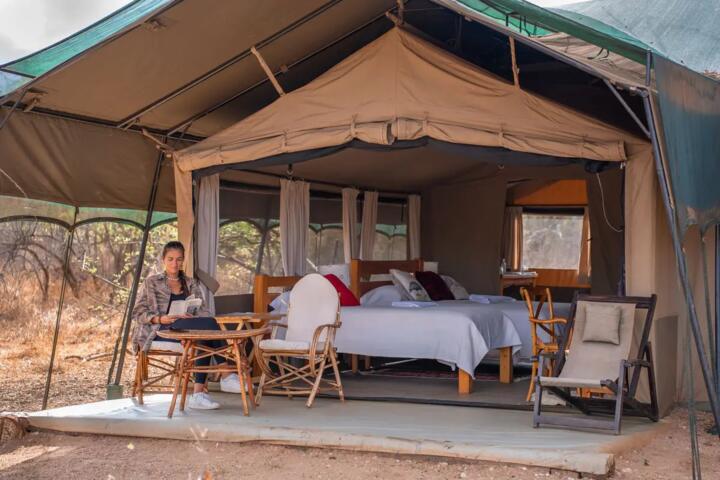
Defining the Experience
In the safari industry, "Private Safari Lodges" usually refers to accommodations located within private concessions or conservancies, often offering exclusive-use villas or small-scale boutique stays. Conversely, "Shared Camps" are typically larger properties, often located inside National Parks, where game drive vehicles are shared with other guests and dining is communal. The primary differentiator is not just luxury, but "autonomy."
In a private concession like Sabi Sands (South Africa), guides can drive off-road to track a leopard. In a shared environment like Kruger National Park, vehicles must stay on marked tarmac or gravel roads. Data from safari operators suggests that off-road capabilities in private settings increase high-profile predator sightings by nearly 40% compared to road-bound public park tours.
A practical example: at a shared camp, your morning coffee is dictated by a 6:00 AM group departure. In a private lodge, if you want to sleep until 8:00 AM and then spend four hours at a single waterhole, the itinerary bends to your will, not a schedule.
The Pitfalls of Choice
Many travelers prioritize "room decor" over "land rights." The biggest mistake is booking a five-star hotel located in a high-traffic public area, assuming the wildlife experience will be exclusive. This leads to "crowded sightings," where 15 vehicles surround a single lion, a common issue in the Ngorongoro Crater or central Serengeti during peak seasons.
The consequence is "Safari Fatigue." When you spend 30% of your time maneuvering through traffic or waiting for your turn at a sighting, the connection with nature is severed. Furthermore, shared camps often have strict "gate hours." If a kill happens at 6:30 PM but the park gates close at 6:00 PM, you miss the action. Private concessions do not have these artificial boundaries.
Another pain point is the "Shared Vehicle Dynamic." You might be a professional photographer paired with a family with loud toddlers. Their needs—frequent breaks and shorter drives—will dictate your experience, effectively devaluing a trip that costs thousands of dollars per night.
Strategic Selections
Prioritize Land Management
Check if the lodge is on a "private concession." This allows for night drives and walking safaris, which are often prohibited in shared national parks. Brands like Singita or Wilderness Safaris invest heavily in these land rights to ensure low vehicle density (often limited to two vehicles per sighting).
Evaluate Vehicle Policies
If booking a shared camp, inquire about the "Single Supplement" for a private vehicle. It typically costs between $400 and $700 per day. While expensive, it transforms a communal camp into a semi-private experience, allowing you to dictate the pace without the six-figure price tag of an exclusive-use villa.
Analyze Guest-to-Land Ratios
Look for the "Hectares per Guest" metric. Top-tier private lodges in the Okavango Delta, such as those run by andBeyond, often maintain a ratio of 1,000 hectares per guest. In contrast, shared camps in busy sectors of the Masai Mara may see hundreds of people concentrated in a 10km radius during the Great Migration.
Night and Off-Road Access
Opt for private lodges if you want to see nocturnal species like aardvarks, honey badgers, or leopards hunting. Shared camps are legally tethered to daylight hours. Night drives utilize infrared spotlights to minimize animal disturbance while providing a 24-hour window into the ecosystem's lifecycle.
Consider Seasonal Flow
During the "Green Season" (low season), shared camps are significantly less crowded. If your budget is tight, a shared camp in the Luangwa Valley during the shoulder month of May offers a near-private experience at 50% of the cost of a private lodge in July.
Real-World Scenarios
Case Study: The Serengeti Shift
A group of six photographers initially booked a high-end shared camp in the Seronera region of the Serengeti. They faced "sighting queues" of 10+ vehicles. After three days, they moved to a private mobile camp in a northern conservancy. Result: They spent 5 hours alone with a cheetah coalition. Though the daily rate was 25% higher, their "shutter time" increased by 300%.
Case Study: Family Multi-Gen Trip
The Miller family (8 pax) opted for a private-use lodge in the Madikwe Game Reserve rather than a shared camp. By having a private chef and a dedicated ranger, they saved approximately $2,000 on "add-on" private vehicle fees they would have incurred at a shared camp, while also enjoying a custom kids' program that didn't disturb other guests.
Comparative Analysis
| Feature | Private Safari Lodges | Shared Camps / National Parks |
|---|---|---|
| Driving Flexibility | Off-road tracking allowed | Strictly on-road only |
| Sighting Density | Max 2-3 vehicles per animal | Unrestricted; can be 15+ vehicles |
| Night Drives | Standard offering | Usually prohibited |
| Dining Style | Private or flexible locations | Set times, communal tables |
| Average Cost (pp/pn) | $1,200 - $4,000+ | $400 - $900 |
| Best For | Privacy, specialized interests | Socializing, budget-conscious |
Frequent Traps to Avoid
Do not assume "Luxury" equals "Private." There are ultra-luxury hotels inside National Parks that are technically "shared" because they share the public road network. Always verify the "Concession Status." If the lodge cannot drive off-road, you are paying for the bed, not the wildlife access.
Avoid booking "per person" rates for large groups. If you are 6 or more people, an exclusive-use villa is often cheaper and provides a vastly superior service level. In places like the Waterberg or the Selous, these "Safari Houses" come with a private staff, including a butler and tracker.
Don't ignore the "Transit Time." Shared camps are often located near park gates. This means you spend the first 45 minutes of every drive traveling through "dead zones" where wildlife is scarce due to high traffic. Private lodges are usually positioned in the "heart" of the action, meaning your safari starts the moment you board the vehicle.
FAQ
Is a private lodge worth the extra cost?
Yes, if your goal is photography or specific sightings. The ability to go off-road and stay out after dark provides opportunities that simply do not exist in shared park settings.
Can I get a private vehicle at a shared camp?
Most premium shared camps offer private vehicle hire as an add-on. This is a great middle-ground, giving you privacy during the drive while utilizing the communal facilities of the camp.
Are private lodges safer than shared camps?
Both maintain high safety standards. However, private lodges often have lower guest-to-staff ratios, allowing for more personalized safety briefings and attentive walking escorts at night.
Do shared camps have better locations?
Sometimes. National Parks were often designated because they contain the most famous landmarks (like the Ngorongoro Floor). Private concessions usually border these parks, acting as buffer zones with the same animals but fewer people.
Which is better for solo travelers?
Shared camps are often better for solos. The communal dining at places like Sanctuary Retreats allows for networking and sharing stories with fellow travelers, whereas private lodges can feel isolating.
Expert Industry Insight
In my fifteen years of tracking the safari market, I’ve observed that the most satisfied travelers are those who "blend" their itinerary. Don't feel forced to choose just one. Spend three nights in a shared camp in a famous area like the Maasai Mara National Reserve for the sheer volume of animals, then move to a private conservancy like Mara North for three nights of exclusive, off-road tracking. This "Hybrid Model" balances the iconic vistas of public parks with the intimate, high-stakes wildlife encounters of a private sanctuary. Always ask your agent for the "vehicle occupancy" maximum—if a camp puts 9 people in a car, walk away.
Summary
The choice between private safari lodges and shared camps hinges on your tolerance for crowds and your desire for schedule autonomy. Private lodges offer unparalleled access and flexibility through off-road rights and night drives, making them the gold standard for enthusiasts. Shared camps provide a social atmosphere and entry-level pricing for those focused on seeing the "Big Five" within a traditional framework. To maximize your trip, audit the land-use rights of your accommodation and prioritize properties that guarantee low vehicle density. For the best of both worlds, invest in a private vehicle at a reputable shared camp or split your stay between both formats.