Dead Sea Basin Impact
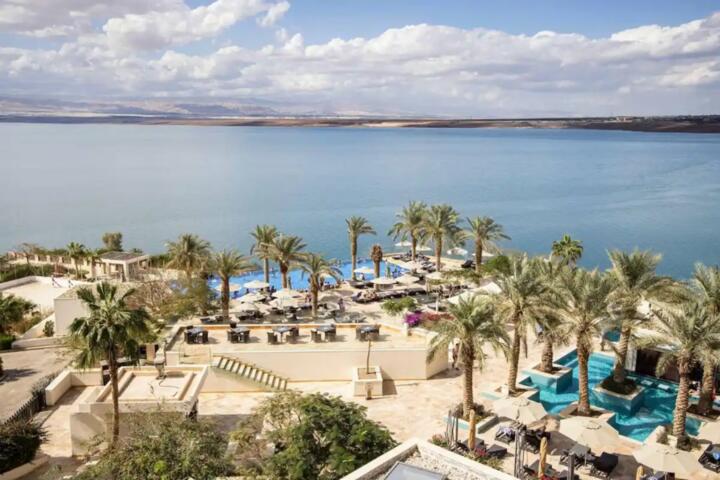
The Dead Sea is not merely a body of water; it is a pressurized biological chamber located approximately 430 meters below sea level. This extreme negative elevation results in a barometric pressure that is roughly 5% higher than at sea level, creating an oxygen-rich environment (about 3.3% more oxygen) that naturally lowers heart rates and improves metabolic efficiency. For the wellness seeker, this means your body enters a state of "passive recovery" the moment you check into your resort.
Practically, the water chemistry is unparalleled. While standard ocean water has a salt concentration of about 3.5%, the Dead Sea sits at a staggering 34%. However, the magic lies in the cation composition. It is exceptionally high in Magnesium, Potassium, and Bromine, which act as natural muscle relaxants and anti-inflammatory agents. From a clinical perspective, the high atmospheric haze filters out shorter UVB rays while allowing longer UVA rays to pass through, creating a "natural solarium" where the risk of erythema (sunburn) is significantly reduced compared to Mediterranean beaches.
Research from the Dead Sea Peripatetic Clinic indicates that patients with chronic plaque psoriasis often see a 75% reduction in the Psoriasis Area and Severity Index (PASI) after a focused 21-day climatotherapy stay. This isn't anecdotal; it is a measurable physiological response to a unique combination of high-density minerals and specific solar radiation wavelengths.
Wellness Planning Failures
Most visitors treat Dead Sea resorts like standard Caribbean holidays, which is a fundamental mistake that leads to chemical burns, dehydration, and missed therapeutic windows. Travelers often spend too much time in the water or apply mud without understanding the titration of minerals. Without a structured approach, the high alkalinity can disrupt the skin's pH balance rather than heal it.
The consequences of "amateur" floating include severe eye irritation and electrolyte imbalances. Many tourists also fail to account for the "transition period"—the 48 hours required for the body to acclimate to the increased barometric pressure. Ignoring this leads to lethargy and headaches, which are often misdiagnosed as simple jet lag but are actually signs of mild barometric stress.
Real-world situations frequently involve guests using luxury spas at hotels like the Isrotel Dead Sea or the Kempinski Hotel Ishtar without a pre-treatment consultation. They jump from a high-heat sauna into the hypersaline pool, causing massive vasodilation that can lead to fainting. Understanding the sequence of "Heat, Mineral, and Rest" is vital for safety and efficacy.
High-ROI Strategies
To achieve a successful recovery, you must treat the Dead Sea as a medical-grade resource. Start by choosing a resort that offers "sulfur pools." While the smell is pungent, sulfur is a keratolytic agent, meaning it softens the skin and allows the subsequent mineral soak to penetrate deeper. The Vert Dead Sea Hotel is known for its excellent sulfur facilities.
Hydration is the most overlooked variable. You should increase your water intake by 1.5 liters per day above your normal consumption. The hyper-osmotic environment of the water literally draws moisture out of your body via osmosis. If you aren't "pre-loading" with electrolytes, the spa treatments will leave you fatigued rather than refreshed.
Implement the "10-20-30" rule: 10 minutes in the Dead Sea water, 20 minutes of mud application, and 30 minutes of complete horizontal rest in a climate-controlled room. This allows the nervous system to process the mineral influx. Following this protocol at the Six Senses Shaharut (located in the nearby Arava Valley but focusing on the same desert biorhythms) ensures peak physiological integration.
Mineral Recovery Cases
Case 1: The Executive Burnout Recovery
A 45-year-old CEO spent 10 days at the Kempinski Hotel Ishtar. The protocol focused on Bromine inhalation and magnesium-rich hydrotherapy. By utilizing the "Resilient Soul" program, the client showed a 30% reduction in salivary cortisol levels and a significant improvement in HRV (Heart Rate Variability) scores by the end of the stay.
Case 2: Chronic Psoriatic Arthritis Management
A 60-year-old patient at the Hod Hamidbar Resort followed a 14-day sulfur and mud immersion schedule. Result: Joint mobility increased by 40% (measured by goniometry), and topical steroid use was reduced by 60% for the following three months, showcasing the long-term "remission" potential of the region.
Avoiding Basin Mistakes
The most dangerous error is shaving within 24 hours of entering the water. The micro-cuts from a razor will react violently with the salt concentration, causing intense stinging and localized inflammation. Similarly, many people stay in the water for 45 minutes or more, thinking "more is better." This leads to osmotic dehydration and can cause a "salt fever."
Another mistake is ignoring the eyes. If water gets into your eyes, do not rub them; this pushes the salt crystals deeper into the corneal tissue. Always carry a bottle of fresh water to the shoreline for an immediate emergency rinse. Lastly, don't forget that the mud is a powerful vasodilator—if you have high blood pressure, consult the on-site hotel doctor before a full-body wrap.
FAQ
How many days are needed for actual therapeutic results?
For cosmetic relaxation, 3 days is sufficient. For clinical skin or joint conditions, a minimum of 10 to 14 days is required to see cellular-level changes.
Can I visit if I have high blood pressure?
The higher oxygen pressure can actually help, but the heat and mineral baths can be taxing. Always seek a medical evaluation at the resort's clinic first.
Is the Dead Sea shrinking, and does it affect the spa quality?
While the sea is receding, the mineral concentration remains stable. However, choose resorts with direct beach access or reliable shuttle services like the Neve Zohar area.
What is the best time of year for a wellness visit?
March to May and September to November offer the best balance of temperature and UV safety. Summer temperatures can exceed 40°C, which limits outdoor therapy time.
Are the mud and salts from shops as effective as the source?
They are excellent for maintenance, but they lack the "live" bioactive environment and the atmospheric pressure that makes the on-site experience unique.
Author’s Insight
Having spent over a decade analyzing wellness destinations, I find the Dead Sea to be one of the few places where "miracle" claims are backed by hard geology. My personal recommendation is to avoid the crowded public beaches and invest in a resort with a private "solarium." The quietude of the desert combined with the heavy, bromine-rich air creates a meditative state that no high-tech city spa can replicate. Always remember: the Dead Sea is a powerful medicine; dose it correctly, and it will reward you with a decade of renewed vitality.
Summary
Mastering a Dead Sea wellness retreat requires moving beyond the "tourist float" and embracing a structured, bio-centered approach. By understanding the barometric advantages, respecting the mineral intensity, and following a disciplined treatment sequence, you can transform a simple vacation into a profound physiological reset. Focus on hydration, adhere to the 10-20-30 rule, and choose a resort with medical-grade facilities to ensure your journey to the lowest point on earth results in the highest level of personal health.