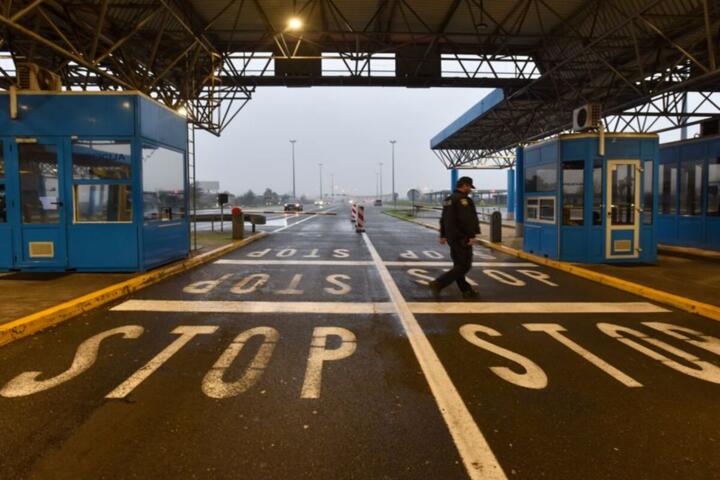
Schengen Crossings In Practice
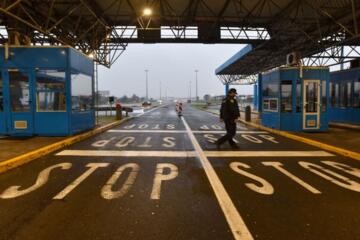
Crossings inside the Schengen Area usually do not involve routine border guards stopping every traveler at the line. Instead, checks happen in other ways: police patrols, targeted document checks, and controls at transport hubs. You may also see “border” infrastructure that looks unused, while officers still conduct checks away from the border.
For example, a train from Germany to the Netherlands may run without any formal stop, yet a plainclothes officer can board and request passports or residence permits. On a road trip, you might pass through a normal-looking checkpoint where officers ask for documents and ask short questions, then wave you through. In airports, document checks are often integrated into security and boarding processes rather than a separate border line.
Schengen rules remove systematic border checks at internal borders, but they do not remove all law-enforcement activity. The Schengen Borders Code allows temporary reintroduction of border controls under defined conditions, and it also permits police checks based on risk or suspicion. That mix explains why two trips on the same route can feel different.
Common Misconceptions And Dependencies
Many travelers expect “no checks” once they are inside Schengen. That expectation breaks down when police conduct targeted checks, when a country temporarily reintroduces controls, or when transport operators enforce identity rules for ticketing and safety.
Another misconception is that only border guards can check documents. In practice, police forces can carry out identity checks under national law, and those checks can occur on trains, at bus stations, or near major roads. The legal basis differs by country, so the visible process can vary even when the overall Schengen framework is the same.
Crossing experience also depends on supporting systems. If your travel involves a flight, airline staff may verify identity documents before boarding, and that step can happen even when there is no internal border control. If you travel by car, officers may use vehicle stops to check for documents, insurance, or residence status. If you travel by rail, random checks can occur during the journey, and the officer’s approach can feel abrupt because the train is moving.
Finally, the “Schengen” label does not mean every country uses identical procedures. The Schengen Agreement covers internal border arrangements, but each member state sets its own operational details for police checks, document formats, and how they handle non-compliance.
What To Do Before You Go
Carry The Right Documents
Bring the same document you used for entry and keep it accessible. For non-EU travelers, that usually means a passport, and for EU citizens it means an identity card or passport. If you have a residence permit, carry it as well; officers may ask for proof of lawful stay. If you travel with a child, carry the child’s own document, not only the adult’s.
A practical aside: on my last planning pass for a rail itinerary, I noticed that my phone’s photo of the passport was not accepted as a substitute during a hotel check-in. Border and police checks can be stricter than accommodation checks, so bring the physical document.
If your document is close to expiry, check the entry rules for your nationality and the countries you will pass through. Even inside Schengen, officers can refuse entry to a person who cannot prove lawful status.
Expect Targeted Identity Checks
Targeted checks often look like short stops rather than a full border process. You might be asked to show your passport, answer basic questions about your trip, or confirm your address if you are a resident. Officers may also check whether your stay matches the purpose of travel and the dates of entry.
On trains, the check can happen at any time. If you are in a compartment, the officer may ask everyone for documents, which can slow the group. If you are traveling with a group tour, the officer may ask the guide to confirm names and itinerary details, then proceed with individual checks.
In cars, you may encounter a roadside stop where officers ask for documents and sometimes vehicle paperwork. The stop can be brief, but you should keep your documents within reach and avoid fumbling while the engine is running.
Plan For Temporary Reintroduced Controls
Schengen internal border controls can be reintroduced temporarily under specific conditions, such as threats to public policy or internal security. When that happens, you may see more visible border-style procedures, including document checks at internal crossings.
To plan, check official travel advisories from your destination countries and monitor announcements from the relevant authorities. If controls are active, they can affect crossing time on roads and rail. A mild frustration many travelers report is that the “no border” assumption leads to late departures, and then the queue forms where you did not expect it.
For a concrete example, some countries have used temporary controls during major events or after security incidents. The exact dates and locations vary, so treat any “always smooth” expectation as unreliable.
Use Arrival-Time Buffers
Even without internal border controls, delays can come from police checks, document verification by transport staff, or secondary screening in airports. Build a buffer into your schedule, especially for connections that require changing trains or crossing between terminals.
A practical number: if you have a same-day rail connection with a tight platform change, plan for 30–60 minutes of buffer beyond the published transfer time. If you are driving through multiple countries in one day, add extra time for roadside stops and traffic, because identity checks can occur without warning.
If you are traveling with medical documents or mobility equipment, keep them in an accessible folder. Officers may not ask for them, but if they do, you will save time by having them ready.
Case Examples Of Realistic Scenarios
Train Check During A Routine Journey
A traveler rides a direct train from France to Belgium. No border stop occurs, but an officer boards mid-journey and checks passports for several passengers. The traveler shows the passport, answers a short question about the trip purpose, and continues without further delay. The officer does not stamp anything; the check ends after a few minutes.
What matters here is the mechanism: the check happens under police authority rather than a systematic border line. The traveler’s experience depends on whether the officer selects their carriage and whether documents match the travel dates.
Roadside Stop Near An Internal Route
A family drives from Germany into Austria. The route looks like normal highway travel, but officers stop vehicles at a roadside point for document checks. The driver presents passports and vehicle paperwork; the officer asks where the family is staying. After a brief verification, the family is allowed to continue.
This scenario shows how internal controls can appear even when there is no visible “border crossing” building. The family’s preparation—having documents ready—reduces friction.
Checklist For Border-Related Delays
| Situation | What You May See | Typical Request | How To Reduce Delay |
|---|---|---|---|
| Targeted police check | Officer boards train or stops a vehicle briefly | Passport/ID and proof of lawful stay | Keep documents accessible; answer calmly |
| Airport identity verification | Document check before boarding | Passport/ID matching the ticket | Use the same name format as booking |
| Temporary internal controls | More visible border-style queues | Document and stay verification | Add time buffers; check official notices |
| Non-compliance risk | Secondary questioning or refusal to proceed | Clarification of status and dates | Carry supporting documents; stay cooperative |
Step-by-step checklist for the day of travel: gather documents the night before, keep them in one pocket or folder, confirm your accommodation address, arrive early enough for potential identity checks, and avoid relying on screenshots as a substitute.
Common Mistakes Travelers Make
One frequent mistake is leaving documents in a checked bag or deep in a backpack. If an officer asks for documents on a train or at a roadside stop, you lose time searching, and the situation becomes more stressful than it needs to be.
Another mistake is assuming that a Schengen stamp or lack of stamps means “no record.” Officers can still verify entry dates and lawful stay through administrative systems. If your dates do not match your claim, you may face delays or denial of onward travel.
Some travelers also confuse internal checks with visa rules. A person can be inside Schengen and still have an issue if their visa-free period or authorization does not cover the current dates. That mismatch can trigger questions even without a border line.
A small but real friction point: name formatting. If your booking uses a different order of given names and surnames than your passport, staff may ask for clarification. I once saw a boarding agent pause for a manual check on a ticket labeled “Version 2” after a last-minute correction on 2024-11-03.
FAQ
Do I Need My Passport Inside Schengen?
Carry your passport or identity document. Police checks and transport staff verification can occur inside Schengen, and you may need to prove lawful stay or identity.
Will There Be A Border Stamp When Crossing Internally?
Internal crossings usually do not involve systematic stamping. If a check occurs away from the border, you may not receive any stamp at all.
Can Police Check Documents Without A Border Post?
Yes. Police identity checks can happen on trains, at stations, or during roadside stops under national law, even when internal border controls are not systematically applied.
What Changes During Temporary Internal Controls?
Expect more visible document checks and possible queues at internal crossings. The timing and locations depend on official notices issued by the countries applying controls.
What If My Document Is Expired Or Damaged?
Bring a valid document. If your passport or ID cannot be used for identification, officers may refuse entry or deny onward travel, even if you are already inside Schengen.
Author's Insight
Schengen internal crossings are best understood as “no routine border line,” not “no checks.” Police identity checks, transport-operator verification, and temporary reintroduced controls all affect what travelers experience on the ground.
For planning, the most reliable approach is to treat documents as the primary dependency and time buffers as the practical mitigation. If you travel by train or car, targeted checks can occur without a predictable schedule, so readiness matters more than guessing the exact moment.
When you see delays, the cause is often administrative rather than dramatic: a name mismatch, a date verification question, or a secondary check after an initial document review. That pattern helps you respond calmly and reduce time loss.
Key Takeaways
- Inside Schengen, routine border-line checks usually do not happen, but targeted police and transport checks still occur.
- Temporary reintroduced internal controls can create border-style queues; check official notices for your route.
- Carry the physical document you used for entry, keep it accessible, and plan extra time for connections.
- Document validity and name/date consistency drive outcomes more than the presence or absence of a visible border post.