Desert Excursions Need Planning
Desert trips place you far from routine help, so small choices compound quickly. Heat changes how your body handles water and salt, wind changes how you breathe and see, and distance changes how long it takes to reach the next shelter. A planned itinerary also reduces the chance that you arrive at the wrong place at the wrong time for lighting, temperature, or access rules.
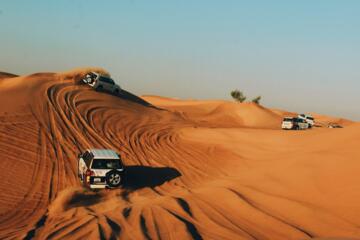
Planning starts with the basics: route type (dunes, gravel tracks, paved access), time of day, and who controls the vehicle. For example, a 6-hour outing with a midday start can feel manageable on paper, yet the same duration with a late-afternoon start often reduces heat stress and improves visibility for navigation. If you’re joining a guided tour, ask how they handle delays when sand or road conditions slow the group—because the desert does not “pause” for schedules.
Even when a tour includes transport, you still need a plan for hydration, sun protection, and communication. Many travelers pack water but skip a method for tracking intake, which turns into guesswork once the pace changes. I’ve seen people rely on “we’ll stop often,” then discover the stops are short and focused on photos rather than recovery.
Main Planning Mistakes
One common mistake is treating desert conditions as a single weather label. Temperature, humidity, wind, and cloud cover interact, and the body responds to heat load rather than the forecast headline. Another mistake is assuming that “guided” means “no decisions required,” even though you still decide when to drink, how to pace yourself, and what to do if you feel unwell.
People also underestimate how quickly dehydration and heat illness can progress. Heat illness risk rises with exertion, inadequate fluid and salt intake, and limited shade. In deserts, shade is often intermittent, and wind can increase evaporative cooling while still allowing core temperature to rise. That mismatch—feeling cooler while your body overheats—creates a false sense of safety.
Planning depends on supporting technologies and systems. Navigation relies on GPS reception, offline maps, and the driver’s route knowledge; in remote areas, GPS can drift or lose accuracy near steep dunes or canyons. Communication depends on mobile coverage, satellite messaging devices, and whether the guide carries a working power supply. Vehicle readiness matters too: tire pressure, spare tires, and fuel range determine whether a “short detour” stays short.
Finally, travelers often ignore access and legal constraints. Some desert areas require permits, have restricted zones, or enforce rules about off-road driving. If you plan to self-drive, you need to confirm road status, local regulations, and whether your route crosses protected land. A tour operator may handle permits, but you still need to understand what you’re agreeing to.
Solutions And Advice
Build A Heat-Smart Schedule
Choose a start time that reduces peak heat exposure. Many operators plan activities around morning or late afternoon because solar radiation and ambient temperature typically peak mid-day. A practical target is to finish the most physically demanding segment before the hottest hours, then use the cooler period for longer walking or dune climbing. If your itinerary includes a long drive, schedule breaks that include shade and slow pacing, not only photo stops.
Track your plan with a simple timeline: departure time, first stop, meal or rest window, and return time. If the tour says “flexible,” ask what flexibility means in minutes and what triggers a change. I once checked a sample itinerary dated 2026-03-14 and noticed the “buffer” was only 30 minutes; that detail changes how you should pack and how you should judge risk.
Pack For Water, Salt, And Sun
Hydration planning should match exertion and heat. For many adults, a common field approach is to drink regularly rather than in large amounts at once, and to include electrolytes if you sweat heavily. Exact needs vary by body size, fitness, and temperature, so treat any “one number” advice as a starting point, not a guarantee. If you wear contact lenses, plan for dry eyes and dust exposure; sunglasses and a hat reduce both discomfort and squinting that slows you down.
Sun protection should cover skin and eyes. Use broad-spectrum sunscreen, reapply as directed, and consider clothing that blocks UV rather than relying only on sunscreen. For dust, a scarf or mask can reduce inhaled particles, especially when vehicles kick up sand. I prefer to pack a small “reset kit” in a separate pouch—sunscreen, lip balm, and a spare pair of socks—because digging through a trunk during a stop is where plans fall apart.
Use Navigation And Backup Comms
Even on guided tours, carry a way to confirm location and communicate if separated. Offline maps on your phone help when signal drops, but they require prior download and battery management. A power bank with enough capacity for at least one full charge is a practical minimum for long outings; check the battery rating and cable quality before you leave home.
If you travel where mobile coverage is unreliable, consider a satellite messenger for emergency contact. Learn how it works before the trip, because sending a message in panic often fails when people haven’t tested the app or pairing. In my experience with travel checklists, the “works at home” test matters more than the device’s marketing name.
Vet The Tour And Vehicle Readiness
Ask how the operator manages safety and logistics. Confirm group size, guide-to-guest ratio, vehicle type, and whether they carry first-aid supplies and water for emergencies. Vehicle readiness includes tire condition, spare tires, recovery gear, and a fuel plan that matches the route. If the tour uses 4x4 vehicles, ask how they handle tire pressure changes and whether they have a procedure for stuck scenarios.
Request the itinerary details in writing: route description, approximate driving times, and planned rest stops. If the operator cannot describe the route beyond “desert roads,” treat that as a planning gap. A reputable operator can explain what they do when conditions change, even if they cannot predict every delay.
Case Examples
Family Trip With A Midday Start
A family booked a half-day dune excursion with a midday departure. During the drive, the children became restless, and the group increased walking pace during a short stop. The guide offered water, but the family had not planned a hydration rhythm, so intake was delayed until symptoms appeared. The trip still ended safely, yet the family reported headaches and fatigue that they linked to the heat exposure and dust.
In a revised plan, the same family would shift the start earlier, schedule longer shaded breaks, and pre-decide a “drink every stop” rule. They would also bring electrolyte packets and a dust mask for the youngest traveler, because dust irritation can reduce willingness to drink and rest.
Solo Traveler On A Self-Drive Route
A solo traveler planned a self-drive route using a phone GPS app and a downloaded map. The route initially matched the track, then a sand patch forced a detour that left the planned path. Mobile signal was absent, and the traveler relied on the phone’s compass and visual landmarks. The traveler reached a safe turnaround point, but the detour increased driving time and reduced daylight margin.
The educational lesson is not “never self-drive,” but “plan for uncertainty.” The traveler would benefit from a written route description, a second navigation method (offline map plus compass bearings), and a strict time cutoff for turning back. Carrying extra water and a power bank would also reduce the risk of being forced into a longer stop while devices run low.
Planning Checklist And Tradeoffs
| Decision Point | More Risk | Lower Risk | What To Ask Or Do |
|---|---|---|---|
| Time Of Day | Midday walking or long exertion | Morning/late-afternoon segments | Confirm the hardest activity window |
| Hydration Plan | Drink only when thirsty | Regular intake with electrolytes if needed | Set a “drink at every stop” rule |
| Navigation | Phone GPS only, no offline maps | Offline maps + battery backup | Download maps before departure |
| Emergency Comms | No plan if mobile coverage fails | Satellite messenger or agreed check-in | Test messaging before the trip |
| Vehicle Readiness | Unclear tire/spare/recovery gear | Recovery gear and spare tires carried | Ask what happens if stuck |
Step-by-step checklist you can use the night before: confirm itinerary times, download offline maps, charge devices to 100%, pack water and sun protection in an easy-to-reach bag, and share your plan with someone who can contact local services if you miss a check-in. If you’re joining a tour, ask for the guide’s contact method and the meeting point details, because “we’ll meet at the entrance” often turns into a time sink.
Common Mistakes To Avoid
Travelers often pack water but skip a plan for how to carry it, which leads to uneven intake across the group. Another frequent issue is relying on “cooler weather” assumptions without checking wind and dust. Wind can increase sand exposure and eye irritation, which then reduces willingness to drink and rest.
Some people also underestimate how quickly clothing and gear choices affect comfort. Thin fabrics can trap heat, and dark colors can increase solar absorption. If you bring a hat, verify it stays secure in wind; a hat that flies off becomes a distraction and a safety problem.
Booking mistakes show up too. Vague itineraries, missing start times, and unclear return times make it hard to plan hydration and transport. If a tour description lacks route detail, ask for a clearer explanation of driving surfaces and planned stops. A mild frustration is normal here—many listings treat safety details as optional, and that attitude rarely helps during an actual delay.
FAQ
How Much Water Should I Bring?
Water needs depend on temperature, exertion, and body factors. Plan for regular drinking rather than waiting for thirst, and consider electrolytes if you sweat heavily. If you join a tour, ask how much water the group carries and whether it is shared or reserved for emergencies.
What Time Of Day Is Safest For Desert Walking?
Morning and late afternoon typically reduce heat load compared with midday. Your safest window depends on local conditions and the itinerary’s exertion level, so confirm the schedule and the duration of walking segments.
Do I Need Offline Maps In A Guided Tour?
Offline maps help if you get separated, if the vehicle route changes, or if you need to confirm your location. Download maps before you leave, and pair them with a charged power bank because GPS and screen use drain batteries.
What Should I Do If Someone Feels Overheated?
Stop exertion, move to shade if available, and cool the person using water and evaporation methods while monitoring breathing and alertness. Seek urgent medical help if symptoms include confusion, fainting, severe weakness, or persistent vomiting; desert heat illness can worsen quickly.
Can I Self-Drive In The Desert?
Self-driving can work when you have appropriate vehicle capability, route knowledge, and recovery planning. Confirm local rules, road access, and whether your route crosses protected or restricted areas, then set a strict turnaround time for daylight and fuel.
Author's Insight
Desert excursion planning is a risk-management task, not a packing checklist. Heat illness prevention relies on pacing, hydration rhythm, shade access, and monitoring symptoms, while navigation risk depends on offline tools and power. Vehicle and communication readiness reduce the impact of delays when roads slow down or sand conditions change. I do not have personal clinical experience, so I rely on general safety principles used in outdoor heat guidance and on practical travel logistics: plan for worst-case timing, carry backups, and ask operators for concrete details.
Key Takeaways
- Plan around heat load and exertion, not just the forecast temperature.
- Use a hydration rhythm and include sun and dust protection that matches the itinerary.
- Carry offline navigation and battery backup; plan communication if mobile coverage fails.
- Ask tour operators for written timing, route detail, and vehicle readiness for stuck or delayed scenarios.
- Set a turnaround rule and treat vague schedules as a planning gap.