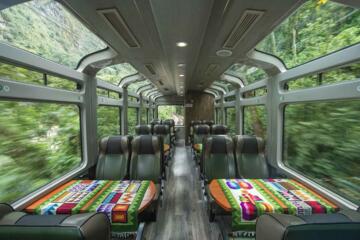
Machu Picchu Entry Time Slots
Machu Picchu entry uses timed tickets tied to specific arrival windows at the site. Your ticket time affects when you can enter the grounds, but it does not control how long the rest of your day takes: train schedules, bus queues, and walking from the bus stop to the entrance gate still set the pace.
A time-slot planning matrix turns those dependencies into a simple decision tool. You list your transport options (train arrival into Aguas Calientes, bus ride to the entrance, and typical walking time), then map them to the entry window so you can choose a plan that leaves room for delays. If you travel with a tight schedule, the matrix helps you avoid the common pattern of booking the earliest possible train and then discovering that the bus line and gate checks do not care about your itinerary.
As a practical example, a traveler who targets a 07:00–08:00 entry window still needs time for the bus ride and the walk to the gate. If the train arrives late, the ticket window may pass before you reach the entrance, which can force a costly rebooking or a missed visit. The matrix is designed to prevent that failure mode by making buffer time a visible variable rather than a hope.
Where Planning Often Breaks
Most schedule problems come from treating the entry window as the start of your day. In reality, it is the start of your access to the site, and everything before it is a separate system with its own delays.
Common mistakes include assuming that bus rides run on a fixed timetable, underestimating queue time during peak periods, and forgetting that ticket checks happen at the entrance gate. Another frequent issue is mixing “train arrival time” with “bus boarding time” without accounting for the walk from the station area to the bus pickup point in Aguas Calientes.
Supporting dependencies matter because they change the effective arrival time at the gate. Train operations depend on the rail operator’s timetable and any service disruptions. Bus operations depend on demand and traffic flow on the road between Aguas Calientes and Machu Picchu Pueblo. Gate checks depend on crowd volume and staffing. Even if each piece is “on time,” their combined variance can still push you past your entry window.
Travelers also misread ticket rules. Timed entry tickets typically correspond to a window, not a flexible arrival time, and the site may enforce access at the gate. If you plan to arrive late “because the ticket is for that day,” you may discover that enforcement is strict. The matrix approach avoids that by planning backward from the window and treating the window as a hard constraint.
Time-Slot Planning Matrix
Build the matrix by working backward from your ticket window. Start with the latest acceptable time you can reach the entrance gate, then subtract the time you need for bus travel, walking, and buffer for queues.
Use three time blocks: (1) transport-to-Aguas-Calientes arrival, (2) Aguas Calientes to entrance travel and queue time, and (3) entrance gate buffer. For block (2), you can use a conservative estimate based on your travel date and crowd expectations. For block (3), add a buffer for ticket scanning and any line at the gate. If you want a concrete starting point, many travelers plan for 60–90 minutes from Aguas Calientes bus pickup to entrance gate during busy periods, then add another 15–30 minutes of gate buffer. Those numbers vary by season, so treat them as planning assumptions, not guarantees.
Then map each candidate plan to the entry window. A plan “fits” when your latest realistic gate arrival time is earlier than the end of the ticket window. If it only fits when everything runs perfectly, it belongs in a lower-confidence category. This is where the matrix helps: it forces you to choose between higher cost, earlier departure, or more buffer.
Side observation: on a sample spreadsheet I used for a group trip in 2024 (Excel version 16.0), the biggest improvement came from adding a single row for “bus queue uncertainty.” That row reduced last-minute changes because it made the risk visible before booking.
Step 1: Convert Your Ticket Window Into a Deadline
Write your ticket window exactly as shown on the ticket, then define a “gate deadline” as the latest time you can reach the entrance gate and still pass checks. If your window ends at 09:00, your gate deadline might be 08:45 to account for scanning and short lines. This is a planning choice, not a rule from the site, so keep it conservative.
Next, list your likely arrival time at Aguas Calientes based on your train. Use the train’s scheduled arrival time, then add a small buffer for station exit and getting to the bus pickup area. If you arrive at 06:30, you might plan 15–25 minutes before you are ready to board a bus. That buffer prevents the matrix from assuming you can instantly transfer.
Finally, subtract the planned bus-and-walk time and gate buffer from the gate deadline. The remaining time becomes your “latest train arrival target.” If no train matches that target, you either choose a different entry window or accept that the plan has a high miss risk.
Step 2: Model Bus and Queue Time as a Range
Bus travel time between Aguas Calientes and the entrance can vary with traffic and demand. Queue time at the bus pickup can also vary by arrival crowd. Instead of using one number, use a range: a “typical” estimate and a “busy-day” estimate.
For example, you might model bus-and-walk as 60–90 minutes during busy periods. If your group includes slower walkers or you expect photo stops on the way, widen the range. If you travel with mobility constraints, treat the range as a minimum and plan extra time, because the gate area can also be crowded.
Side observation: I’ve seen travelers rely on a single “average” travel time from a forum post, then get stuck behind a bus that filled quickly. A range-based matrix avoids that by forcing you to plan for the worst part of the day you are likely to face.
Step 3: Add a Decision Rule for Miss Risk
Set a rule for what you do if you miss the window. Some travelers accept a later entry slot on the same day if the ticketing system permits changes; others plan to rebook for another day. The matrix should reflect your decision rule before you buy transport.
One practical rule: if your plan fits only under the “typical” bus time and leaves less than 20 minutes of gate buffer, downgrade it to “not recommended.” Another rule: if you have to cut the buffer to make the plan fit, choose a different train or a later entry window. You save money by avoiding rebooking, but you also save time by reducing the chance of a day-ending failure.
Tools help you keep this consistent. A simple Google Sheets template with columns for “latest train arrival,” “busy bus time,” and “gate deadline” makes it hard to forget a constraint. I used Google Sheets build 2024.09 for a similar matrix, and the conditional formatting made the “fits vs doesn’t fit” logic obvious.
Educational Case Examples
Scenario A (Solo traveler, early window): A solo traveler buys a ticket window that ends at 08:30. Their train arrives in Aguas Calientes at 05:50. Using a gate deadline of 08:15, they plan 15 minutes to reach the bus pickup, 75 minutes for bus-and-walk on a busy morning, and 20 minutes for gate buffer. The matrix shows a latest train arrival target around 06:00, so the 05:50 arrival fits with a moderate buffer. They still pack snacks and water because the morning queues can stretch, even when the plan fits.
Scenario B (Family group, mid-morning window): A family with two children books a ticket window that ends at 10:00. Their train arrives at 07:40. They model bus-and-walk as 90 minutes and gate buffer as 25 minutes, with a gate deadline of 09:45. The matrix indicates the plan fits only if the bus queue stays near the low end of the range. They decide to add an extra buffer by choosing a later train departure from Cusco that arrives closer to 08:10, trading a slightly higher cost for a lower miss risk.
These scenarios show the matrix’s purpose: it converts “we’ll probably be on time” into a checkable condition tied to your ticket window.
Checklist and Comparison Matrix
The table below compares planning choices by how they affect miss risk and day flexibility. Use it to decide which variable to adjust when your first plan does not fit.
| Planning Lever | What Changes | Effect on Miss Risk | Trade-Off |
|---|---|---|---|
| Earlier train | More time for bus queues | Lower | Earlier start, less sleep |
| Later entry window | Wider time to reach gate | Lower | Less time on-site |
| Wider queue range | More conservative planning | Lower | May force a different train |
| Smaller gate buffer | Tighter fit to window | Higher | More stress if lines form |
Step-by-step checklist you can run the night before travel:
- Copy your ticket window end time into your notes and set a gate deadline 10–20 minutes earlier.
- Write your train arrival time into Aguas Calientes and add 15–25 minutes for station exit and bus pickup walking.
- Choose a bus-and-walk estimate range (for example, 60–90 minutes) based on your travel date crowd expectations.
- Add gate buffer (15–30 minutes) for scanning and short lines.
- Compute whether your latest realistic gate arrival is earlier than the gate deadline.
- If it does not fit, change one variable: train timing, entry window, or your queue assumptions.
Common Mistakes to Avoid
One mistake is planning only for the bus ride and ignoring the queue at the bus pickup. Another is assuming that “scheduled train time” equals “time you can board a bus,” which skips the transfer walk and any waiting for the next bus.
Some travelers also underestimate how quickly a small delay compounds. If you arrive 20 minutes late to the bus pickup and the bus is full, you may wait for the next bus, which can add 30–60 minutes. That kind of delay pattern is why the matrix uses ranges rather than a single average.
Another error is treating the ticket window as flexible. If the site enforces timed entry at the gate, arriving after the window end can block entry. Your plan should treat the window end as a hard boundary, then build buffer time so you do not need to “recover” at the last minute.
Finally, avoid mixing planning sources that use different assumptions. A travel blog might describe a route using older bus pickup points or different operational patterns. If you use third-party guidance, cross-check it with current ticket instructions and the latest transport schedules you can access.
FAQ
How early should I arrive?
Plan to reach the entrance gate before the end of your ticket window, then add a buffer for scanning and short lines. Many travelers target arriving 10–20 minutes before the window ends, but the right number depends on your train arrival and expected bus queues.
What happens if I miss my time slot?
Timed tickets are typically enforced at the entrance gate. If you arrive after your window, entry may be denied, and you may need to rebook according to the ticket’s rules for changes or refunds.
Do I need a separate bus ticket?
Bus access between Aguas Calientes and the entrance is usually handled through bus services that may require a separate booking or voucher depending on your travel date and ticket package. Check the instructions tied to your entry ticket and your transport plan.
Can I change my entry window?
Changes depend on the ticket’s terms and the availability of other windows. Some tickets allow changes with conditions, while others do not; review the ticket confirmation details and the official instructions provided at purchase.
Which transport schedule fits best?
Choose the schedule that makes your latest realistic gate arrival earlier than your gate deadline. The best fit comes from matching train arrival time, transfer walking, bus-and-walk range, and gate buffer to your specific ticket window.
Author's Insight
A time-slot planning matrix treats timed entry as a constraint problem rather than a calendar reminder. That framing reduces reliance on optimistic assumptions about queues and transfers, which are the usual causes of missed windows. The approach also helps travelers communicate internally—who is responsible for which transfer step, and what buffer triggers a change of plan.
Because ticket rules and transport operations can vary by date, the matrix should be paired with the exact instructions shown on your ticket confirmation and the latest transport schedules you can access before departure. If you build the matrix with conservative ranges, you reduce stress even when everything runs “close to normal.”
For health-related comfort, consider that altitude and exertion affect pacing on the day of the visit, so buffer time can also support safer walking and breaks rather than only protecting the entry window.
Key Takeaways
- Timed entry windows act like a gate deadline, while trains and buses create the uncertainty you must plan for.
- Work backward from the ticket window end time to set a realistic gate deadline and latest acceptable train arrival.
- Model bus-and-walk time as a range, then add gate buffer for scanning and short lines.
- Use the checklist to test whether a plan fits under busy-day assumptions before you commit to transport.
- If a plan only fits under perfect conditions, change one variable: train timing, entry window, or buffer assumptions.